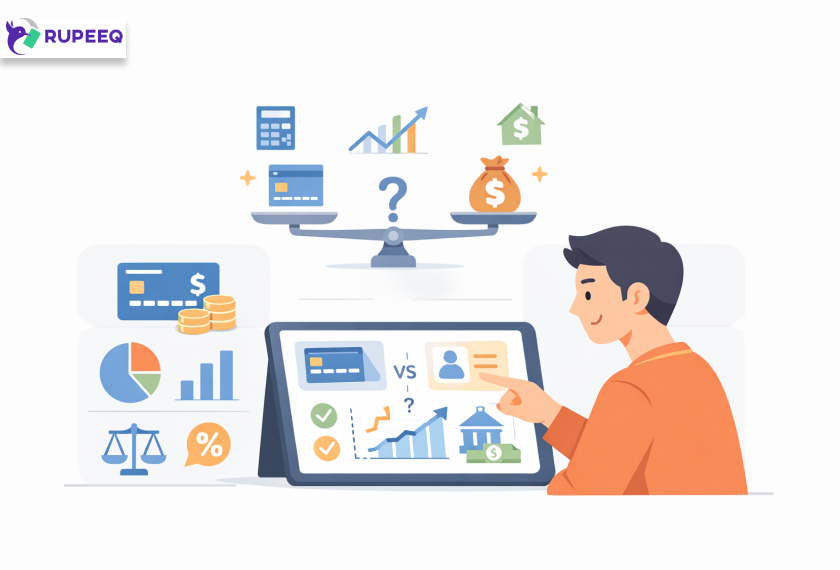
In the current digital world, taking a loan is simple; just a few clicks, and you can access funds instantly. However, borrowers often struggle to choose the right option during financial emergencies, especially when comparing Credit Card Loans vs Personal Loans.
According to the Reserve Bank of India (RBI), personal loan growth reached around 14.2% year-on-year, highlighting the rising demand for quick and accessible credit options among borrowers.
Additionally, RBI data shows that credit card spending surged by nearly 19% year-on-year. This blog will help you understand Credit Card Loans vs Personal Loans, their differences, benefits, and how to choose the best option for your needs.
Introduction to Credit Cards Loans, and Personal Loans
Understanding the basics of both options is essential when comparing Credit Card Loans vs Personal Loans, as each serves different financial needs and situations.
Personal Loans
A personal loan is an unsecured loan offered by banks or NBFCs that can be used for various purposes such as medical emergencies, travel, home renovation, or even big-ticket purchases. Since it does not require collateral, approval is primarily based on your creditworthiness and income stability.
Example: If a person is planning to purchase a car worth ₹8–10 lakhs, a personal loan is usually the better option. It offers structured repayment over several years with manageable EMIs, making it easier to finance such a large expense without straining monthly finances.
Pros:
- Fixed interest rates and predictable EMIs
- Suitable for larger loan amounts
- Longer repayment tenure for better financial planning
- Availability of low-interest personal loans for eligible borrowers
Cons:
- Approval depends heavily on credit score and income
- Requires documentation and verification
- Processing time may vary compared to instant options
Credit Card Loans
Credit card loans are pre-approved credit options provided to existing cardholders. These can be accessed instantly either as cash withdrawals or by converting purchases into EMIs, making them ideal for short-term financial needs.
Pros:
- Instant access to funds with minimal effort
- Little to no documentation required
- Facility to convert purchases into a no-cost EMI service
Cons:
- Generally, higher interest rates
- Lower borrowing limits compared to personal loans
- Risk of overspending due to increased Credit card usage
Example: Suppose someone wants to buy an automatic washing machine worth ₹30,000–₹50,000. In this case, using a credit card and converting the purchase into an EMI can be a smart and quick solution. It avoids lengthy approval processes and allows immediate purchase without a large upfront payment.
Credit Card Loans vs Personal Loans: Key Differences
Understanding Credit Card Loans vs Personal Loans goes beyond just comparing interest rates; it’s about choosing the right financial tool based on your needs, urgency, and repayment capacity.
In real-life situations, borrowers often find themselves confused between quick access and long-term affordability. This is where a deeper comparison of Credit Card Loans, and Personal Loans across key factors becomes essential.
1. Loan Amount
One of the most noticeable differences in Credit Card Loans vs Personal Loans is the loan amount you can access. Personal loans are designed for larger financial needs such as medical emergencies, weddings, or major purchases, offering higher borrowing limits based on your income and credit profile.
On the other hand, credit card loans are limited by your card’s available credit, making them more suitable for smaller, immediate expenses.
2. Interest Rates
When comparing credit card loans vs personal loans, interest rates play a crucial role in determining the overall cost of borrowing. Personal loans generally offer more competitive rates, typically ranging from 9.99% to 16.5% per annum, depending on your credit profile and lender, especially if you qualify for low-interest personal loans, making them a cost-effective option for long-term borrowing.
Credit card loans, while convenient, usually come with significantly higher interest rates, often ranging between 24% to 42% per annum (or around 2%–3.5% per month), which can substantially increase the repayment burden if not managed carefully.
3. EMI Structure
Another important aspect of Credit Card Loans vs Personal Loans is how repayments are structured. Personal loans come with fixed EMIs, allowing borrowers to plan their finances with clarity and consistency over time.
In contrast, credit card loans offer more flexibility, including options like No cost EMI, which can be beneficial for smaller purchases but may vary depending on the lender’s terms.
4. Approval Time
Speed is often a deciding factor when evaluating Credit Card Loans, or Personal Loans. Credit card loans are typically pre-approved and can be accessed instantly, making them ideal during urgent financial situations.
Personal loans, although slightly slower due to verification processes, have evolved significantly, with many lenders now offering Instant personal loans, bridging the gap between speed and affordability.
5. Repayment Tenure
Repayment duration is another key differentiator in Credit Card Loans vs Personal Loans. Personal loans provide longer tenures, often ranging from one to five years or more, allowing borrowers to spread out repayments comfortably.
Credit card loans, however, are usually short-term in nature, requiring quicker repayment and higher monthly outflows.
6. Flexibility
When it comes to flexibility, Credit Card Loans vs Personal Loans offer different advantages. Credit card loans provide immediate access to funds with minimal formalities, making them highly convenient. Personal loans, while slightly more structured, offer better planning and stability for larger financial commitments.
7. Usage Purpose
The purpose of borrowing plays a major role in deciding between Credit Card Loans vs Personal Loans. Personal loans are better suited for planned and significant expenses, while credit card loans work well for urgent or smaller needs, often acting as alternatives to short-term personal loans in certain situations.
8. Approval Criteria
Approval requirements also differ significantly in Credit Card Loans, and Personal Loans. Personal loans involve detailed checks on credit score, income stability, and existing liabilities. Understanding why a personal loan gets rejected can help improve your approval chances. Credit card loans, being pre-approved, are easier to access but depend on your existing credit limit and usage behavior.
How to Select the Best: Credit Card Loans vs Personal Loans
Choosing between Credit Card Loans vs Personal Loans requires careful evaluation of your financial needs, repayment ability, and urgency. Making the right decision can help you save on interest costs and manage your finances more effectively.
- Assess the total loan amount you require – When comparing Credit Card Loans and Personal Loans, start by clearly defining how much money you actually need. Borrowing more than required can increase your repayment burden, while borrowing less may not fully address your financial situation.
- Compare interest rates and hidden charges – A key factor in Credit Card Loans vs Personal Loans is the total cost of borrowing. Always evaluate interest rates along with processing fees, penalties, and other hidden charges before making a decision.
- Analyze your monthly repayment capacity – Understanding your repayment ability is crucial when selecting between Credit Card Loans, and Personal Loans. Ensure that the EMI fits comfortably within your monthly budget without affecting essential expenses.
- Consider how urgently you need the funds – The urgency of funds plays a major role in Credit Card Loans, or Personal Loans. Quick access options may be suitable for emergencies, while planned borrowing allows you to choose more cost-effective solutions.
- Review your credit score and eligibility – Your credit score directly impacts your options in Loans. A higher score can help you secure better interest rates and improve your chances of approval.
Conclusion
When comparing Credit Card Loans vs Personal Loans, there is no one-size-fits-all answer. Personal loans are ideal for larger amounts and longer tenures, while credit card loans are best for quick, short-term needs.
Understanding your financial goals, repayment capacity, and urgency of funds plays a crucial role in making the right choice. Evaluating factors like interest rates, EMI structure, and flexibility can help you avoid unnecessary debt and manage your finances more effectively when choosing between Credit Card Loans and Personal Loans.
At RupeeQ, we help you find the right loan solution tailored to your needs. Whether you’re looking for quick approvals or better interest rates, partner with us to get loans with ease and make smarter financial decisions.
FAQs
1. What is the key difference between credit card loans vs personal loans?
The main difference is that personal loans offer lower interest rates and longer tenures, while credit card loans provide instant access but at higher costs.
2. Which is better: credit card loan vs personal loan?
The right loan option depends on your needs. Personal loans are better for large expenses, while credit card loans are ideal for short-term urgent needs.
3. How do I select the best loan option?
Compare interest rates, tenure, loan amount, and your repayment capacity before choosing between Credit Card Loans vs Personal Loans.
4. Which loan is riskier: a personal loan or a credit card loan?
Comparatively, Credit card loans can be riskier due to higher interest rates and the possibility of overspending.
5. Can I get a loan instantly?
Yes, many lenders now offer Instant personal loans and quick credit card loan options for eligible users.