When people talk about credit health, most conversations revolve around credit score. While the score is important, it is not the only factor lenders look at when deciding whether to approve a loan or how much to offer. One often overlooked but highly influential factor is credit mix.
Many borrowers are surprised to learn that even with a decent or good credit score, their loan eligibility may remain limited because their credit mix is not balanced. Over time, this imbalance can restrict access to larger loans, better interest rates, and longer tenures.
In this blog, we will explain what credit mix means, why lenders care about it, how it affects long-term loan eligibility, and what you can do to build a healthier credit profile gradually and responsibly.
What Is Credit Mix?
Credit mix refers to the types of credit accounts you have used or are currently using.
Instead of focusing only on whether you repay on time, lenders also want to see how well you handle different kinds of credit responsibilities.
Broad Categories of Credit
Credit products generally fall into two categories:
| Type of Credit | Examples |
| Secured Credit | Home loan, car loan, loan against property |
| Unsecured Credit | Personal loan, credit cards, consumer durable EMIs |
A healthy credit mix usually includes both secured and unsecured credit, managed responsibly over time.
Why Credit Mix Matters to Lenders
Lenders use credit mix to assess behavioural risk, not just repayment history.
What Credit Mix Tells Lenders
- Your ability to manage long-term commitments
- How disciplined you are with high-value loans
- Whether you rely heavily on short-term credit
- Your financial planning maturity
A borrower who has successfully managed a mix of loans is seen as more predictable and stable.
RupeeQ Tip:
Credit mix is not about taking more loans. It is about showing lenders that you can handle different types of credit responsibly.
How Credit Mix Affects Long-Term Loan Eligibility
Credit mix does not usually cause sudden changes in credit score. Its impact is slow, structural, and long-term, which is why many borrowers underestimate it.
Scenario 1: Only Credit Cards, No Loans
This is common among young professionals and first-time borrowers.
Example Profile
- 2 credit cards
- No loan history
- Timely repayments
- Credit score: 730
How Lenders View This Profile
- Limited exposure to structured EMIs
- No proof of long-term repayment discipline
- Credit behaviour mostly revolving in nature
While such borrowers may qualify for:
- Small personal loans
- Entry-level credit products
They may face difficulty getting:
- Higher loan amounts
- Longer tenures
- Preferential interest rates
Scenario 2: Only Unsecured Loans
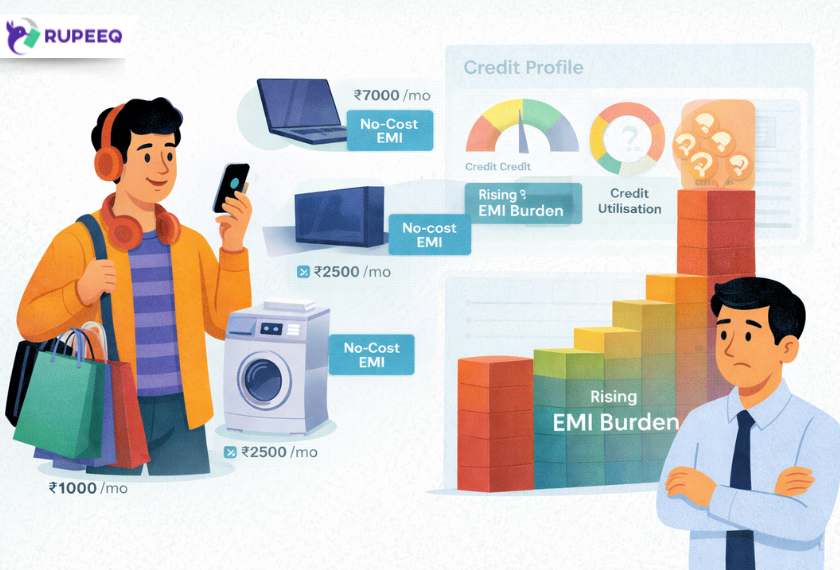
Some borrowers rely heavily on personal loans, No-Cost EMIs, or short-term credit.
Example Profile
- 3 personal loans
- 2 consumer durable EMIs
- No secured loan
- Credit score: 740
Lender Interpretation
- High unsecured exposure
- Lifestyle spending through borrowed funds
- Higher default risk during income stress
Even with a strong score, lenders may: