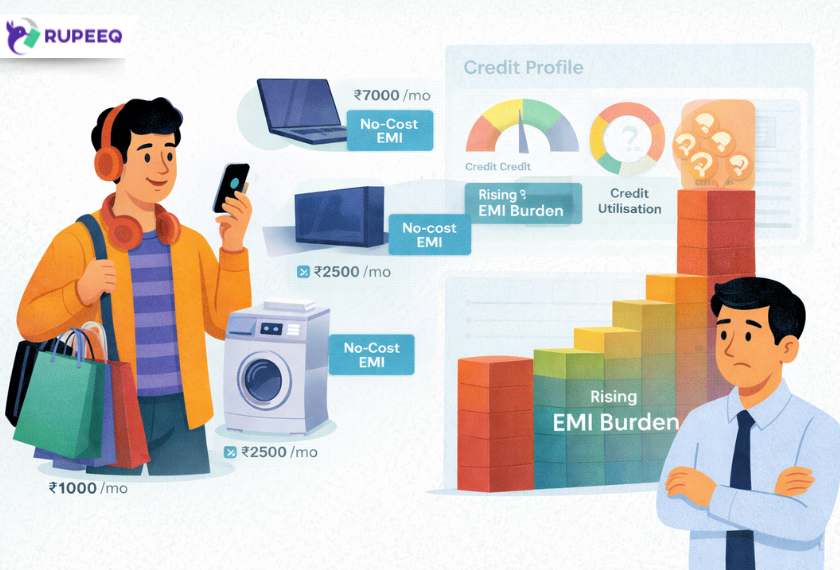
“No-Cost EMI” sounds like a smart financial move. You get the product today, pay in small monthly instalments, and supposedly avoid interest. For many consumers, it feels like a win-win arrangement, especially for big-ticket purchases like smartphones, appliances, or gadgets.
However, what most borrowers do not realise is that frequent or careless use of No-Cost EMI can quietly weaken your credit profile, even if you never miss a single payment. The impact is subtle, gradual, and often noticed only when a loan application gets rejected or comes with unfavourable terms.
In this blog, we will explain how No-Cost EMI works, how lenders and credit bureaus view these transactions, why overuse can harm your credit profile, and what you can do to use No-Cost EMI responsibly without damaging your future loan eligibility.
What Exactly Is a No-Cost EMI?
Before understanding the impact, it is important to clarify how No-Cost EMI actually functions.
How No-Cost EMI Works
- The product price includes an interest component
- The merchant or platform offers a discount equal to the interest amount
- The loan is still booked as an EMI-based credit product
- Monthly instalments are reported to credit bureaus
From a credit perspective, No-Cost EMI is not free credit. It is treated like a loan or credit card EMI.
How No-Cost EMI Appears in Your Credit Report
Many users assume No-Cost EMI does not affect their credit report. That assumption is incorrect.
What Credit Bureaus See
- A new loan or EMI account
- Loan tenure and monthly obligation
- Repayment behaviour
- Outstanding balance
Whether the EMI is interest-free or not does not matter to credit bureaus.
RupeeQ Tip:
From a credit standpoint, No-Cost EMI is still debt. Always evaluate it like a loan, not a discount.
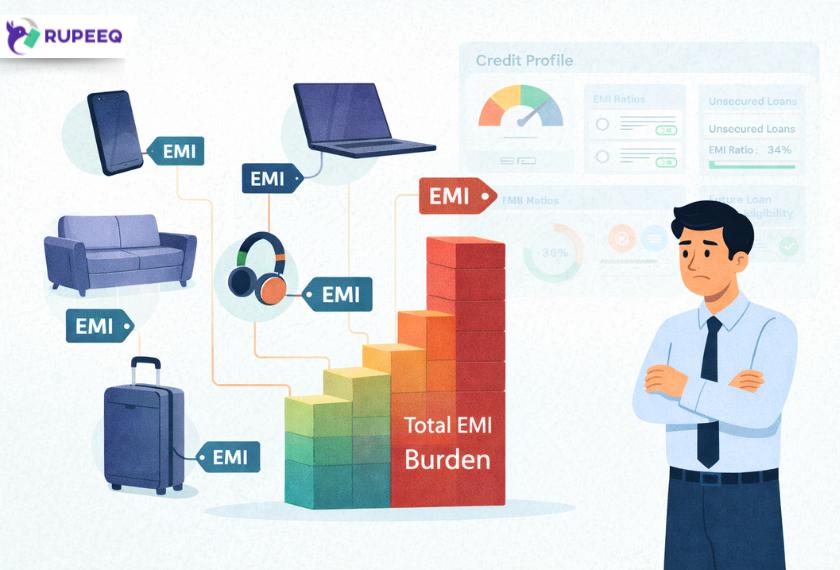
Issue 1: Multiple No-Cost EMIs Increase Your EMI Burden
One No-Cost EMI may seem harmless. The problem begins when users stack multiple EMIs over time.
Example:
| EMI Type | Monthly Amount |
| Smartphone EMI | ₹2,500 |
| Laptop EMI | ₹3,500 |
| Appliance EMI | ₹2,000 |
| Total EMI Burden | ₹8,000 |
If your monthly income is ₹30,000, this means over 26 percent of your income is already committed before rent and other expenses.
Lenders closely track this ratio.
Why This Matters
- Higher EMI burden reduces repayment capacity
- Loan eligibility reduces automatically
- Risk perception increases even with timely payments
Issue 2: No-Cost EMI Increases Unsecured Credit Exposure
Most No-Cost EMIs are unsecured. They are either:
- Credit card EMIs
- Consumer durable loans
- Short-term personal credit products
Why Lenders Worry About This
- Unsecured credit carries higher default risk
- Multiple small loans signal dependency on credit
- Lenders prefer fewer, well-managed obligations
Example Comparison:
| Profile A | Profile B |
| 1 home loan + 1 card | 5 No-Cost EMIs |
| Same credit score | Same credit score |
| Lower risk perception | Higher risk perception |
Even with identical credit scores, Profile A is more attractive to lenders.
Issue 3: Frequent No-Cost EMIs Trigger Multiple Credit Enquiries
Every new EMI transaction usually involves:
- A credit check
- A lender enquiry
- A new account entry
Over Time This Leads To
- Multiple enquiries in short periods
- Perception of credit hunger
- Slower credit score improvement
Example:
A borrower who takes:
- 6 No-Cost EMIs in one year
Will often have: - 6 to 8 additional enquiries
This directly impacts future loan approvals.
RupeeQ Tip:
Avoid treating No-Cost EMI as a default payment option. Each EMI leaves a footprint on your credit profile.
Issue 4: Credit Utilisation Rises Quietly
No-Cost EMI is often linked to credit cards.
What Happens Behind the Scenes
- Full product value is blocked on your card limit
- Available credit reduces immediately
- Credit utilisation increases
Example:
- Credit card limit: ₹1,00,000
- No-Cost EMI purchase: ₹60,000
Your utilisation jumps to 60 percent even before the first EMI is paid.
High utilisation:
- Weakens credit perception
- Slows credit score growth
- Signals cash flow dependence
Issue 5: Too Many Small Loans Weaken Credit Profile Quality
Credit scoring models also assess quality of credit, not just quantity.
Red Flags for Lenders
- Too many short-tenure loans
- Frequent consumer durable EMIs
- Lack of long-term, structured credit
This pattern suggests:
- Lifestyle spending on borrowed money
- Limited financial planning
- Higher behavioural risk
Issue 6: Missed EMI on No-Cost EMI Hurts More Than Expected
Many users underestimate the impact of missing a No-Cost EMI.
Common Misconception
“It is just a small EMI, I will pay next month.”
Reality
- EMI delay is reported like any other loan
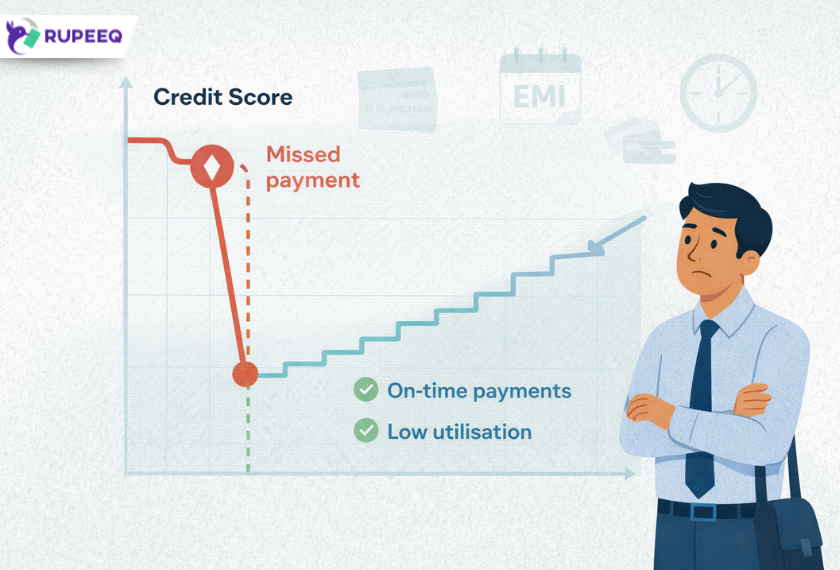
- Even 30+ DPD can cause sharp score drop
- Penalties and interest may apply
Because No-Cost EMIs are frequent and small, they are easier to forget, making missed payments more likely.
How Overuse of No-Cost EMI Affects Loan Eligibility
Here is how lenders typically interpret heavy No-Cost EMI usage:
| Factor | Impact |
| EMI-to-income ratio | Increases |
| Unsecured exposure | Increases |
| Credit enquiries | Increase |
| Utilisation ratio | Increases |
| Risk perception | Worsens |
The result:
- Lower approved loan amount
- Higher interest rate
- Possible rejection for larger loans
When is No-Cost EMI a Good Choice?
No-Cost EMI is not inherently bad. The issue is overuse.
Responsible Use Scenarios
- One or two active EMIs at a time
- EMI comfortably below 10 to 15 percent of income
- Short tenure with predictable cash flow
- No upcoming major loan plans
How to Use No-Cost EMI Without Hurting Your Credit Profile
Step 1: Limit Active EMIs
Try to keep:
- Maximum 1 to 2 active No-Cost EMIs at any time
Step 2: Track Total EMI Burden
Always calculate:
- Total EMIs including loans, cards, and EMIs
- Ensure it stays below 35 to 40 percent of income
Step 3: Avoid Back-to-Back EMI Purchases
Spacing EMIs:
- Reduces enquiries
- Improves credit behaviour signals
Step 4: Prefer Debit or Full Payment for Small Purchases
If you can afford it without stress, avoid EMI altogether.
How RupeeQ Helps You Decode EMI Impact on Credit Profile
RupeeQ helps you understand how your EMIs affect your credit profile, not just your credit score.
By analysing:
- Active EMI obligations
- Credit utilisation
- Enquiry behaviour
- Overall repayment capacity
RupeeQ provides clarity on whether your current credit behaviour supports or hurts future loan approvals.
Key Takeaways
- No-Cost EMI is still a credit product
- Overuse increases EMI burden and risk perception
- Multiple small EMIs weaken profile quality
- Credit score may remain stable while eligibility drops
- Responsible usage protects future borrowing power
Frequently Asked Questions (FAQs)
1. Does No-Cost EMI affect credit score?
Yes. It is reported as a loan or EMI account and affects utilisation, enquiries, and repayment history.
2. Is one No-Cost EMI harmful?
No. Occasional and planned usage is generally safe.
3. Can No-Cost EMI cause loan rejection?
Yes, if it increases EMI burden or unsecured exposure significantly.
4. Is No-Cost EMI better than personal loan?
It depends on usage. Multiple EMIs can be riskier than one structured loan.
5. Should I close No-Cost EMI before applying for a loan?
Reducing EMI burden before a major loan application often improves eligibility.