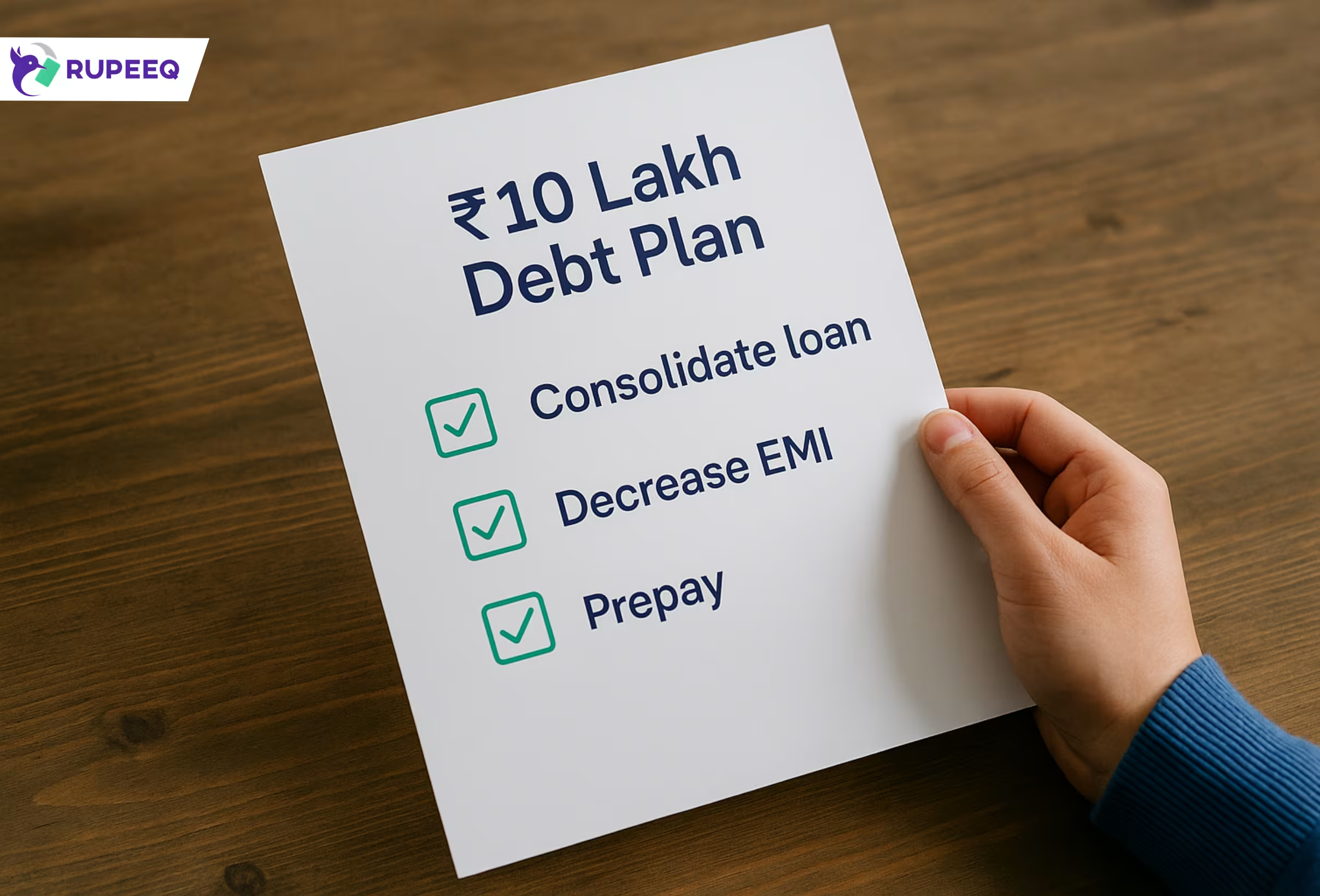
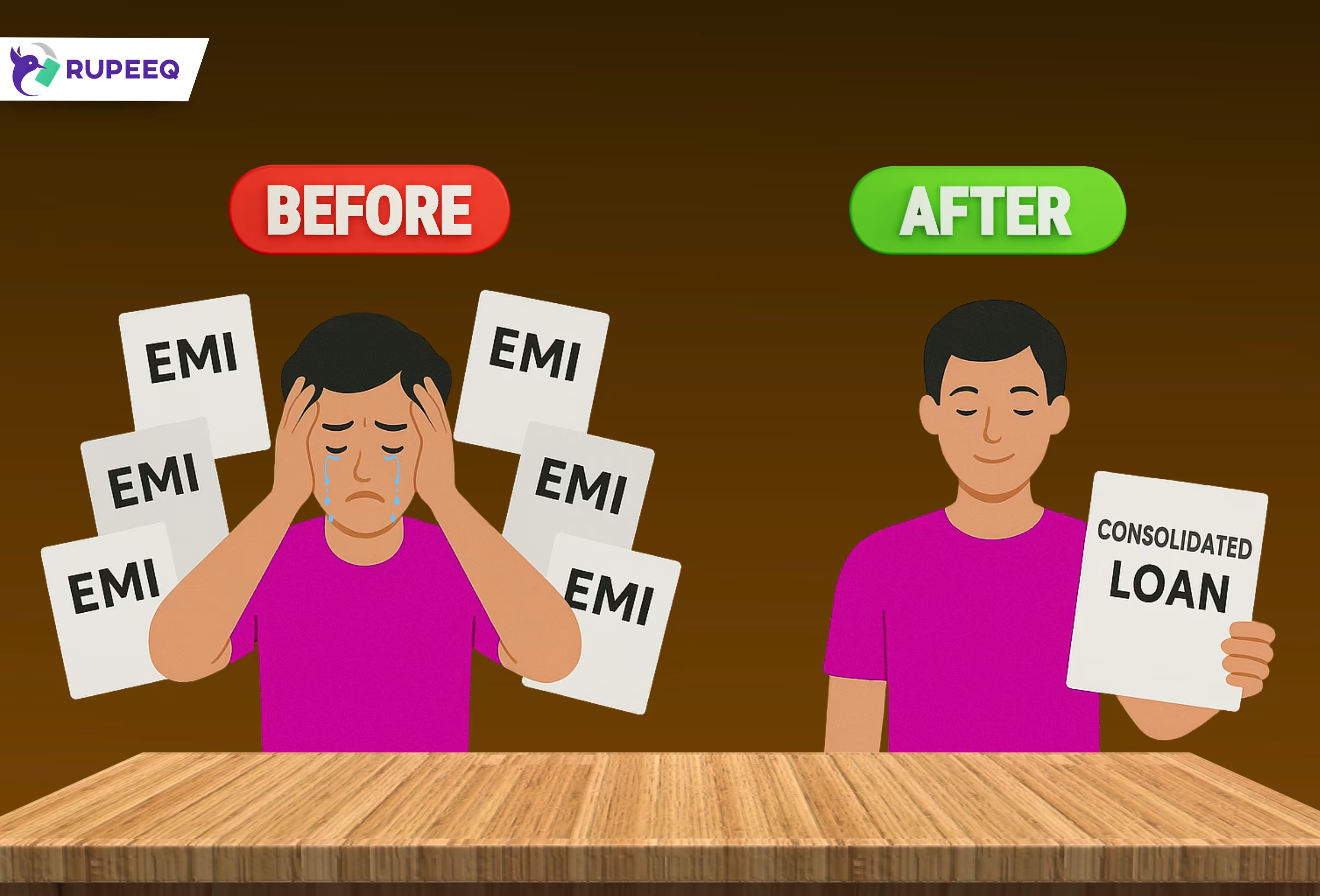
Most people consolidate debt to save money but end up paying more.
That happens because they focus on the monthly EMI instead of the total cost of the loan. A lower EMI feels like relief, but it often stretches the repayment period and quietly increases the total interest you pay.
Here’s the reality. Credit card interest rates in India typically range between 30 percent to 42 percent annually, while Personal Loan interest rates for eligible borrowers usually fall between 10 percent and 18 percent. That gap makes debt consolidation look like an easy win.
However, according to data from the Reserve Bank of India (RBI), interest rates on credit card outstanding balances remain significantly higher than most retail loan categories, which is why Personal Loan-based consolidation appears attractive on the surface.
The problem starts when borrowers choose the wrong loan structure. A longer tenure, hidden fees, or a slightly higher APR can wipe out any expected savings. In some cases, borrowers end up paying thousands more than their original debt simply because they optimized for approval speed or lower EMIs.
If you want consolidation to actually work, you need to approach it like a cost optimization decision, not a quick fix.
This guide on how to choose Personal Loan for Debt Consolidation breaks down exactly what matters. You will learn how to evaluate real loan costs, avoid common traps, and choose a loan that reduces your debt instead of quietly increasing it.
How to Choose Personal Loan for Debt Consolidation
1. Start With Your Exact Debt Profile Before You Compare Loans
Before you compare lenders, get clear on what you are actually consolidating. This is where most people go wrong and end up overpaying.
List each debt with three non-negotiables. Balance, interest rate, and monthly payment. This quickly shows which debts are costing you the most. Credit cards at 20 percent plus should usually be prioritized. A Personal Loan at 11 percent may not need consolidation at all.
Next, calculate the exact loan amount you need. Only include high-interest debts and any foreclosure charges. Do not round up for convenience. Even a small surplus increases your total interest over the loan tenure.
Then look at your current total monthly outflow. This becomes your baseline. If the new EMI is lower but extends repayment by years, you are trading short-term relief for higher long-term cost.
This clarity changes how you evaluate loans. Instead of asking which loan is easiest to get, you start asking which option actually reduces your total repayment. That is the foundation of how to choose Personal Loan for Debt Consolidation without overpaying.
2. Understand the Actual Cost of the Loan
The biggest mistake in Debt Consolidation is assuming the lowest interest rate equals the cheapest loan. It rarely does.
What actually matters is the APR. This includes the interest rate plus processing fees and other charges. Two loans with the same rate can have very different total costs once fees are added.
Also check how interest is calculated. Most Personal Loans use a reducing balance method, but some lenders still market rates in ways that look cheaper than they are. If you are not looking at the total repayment amount, you are missing the real picture.
Here is what you should always compare:
- APR, not just the base interest rate
- Processing or origination fees
- Prepayment or foreclosure charges
- Total repayment amount over the full tenure
A simple way to evaluate this is to ask one question. How much will I pay in total by the end of this loan? Using an EMI calculator can help you quickly estimate this by adjusting the loan amount, interest rate, and tenure to see how your total repayment changes.
That number often tells a very different story than the EMI. A loan with a slightly higher EMI but lower tenure can save you significantly more than a low EMI stretched over years.
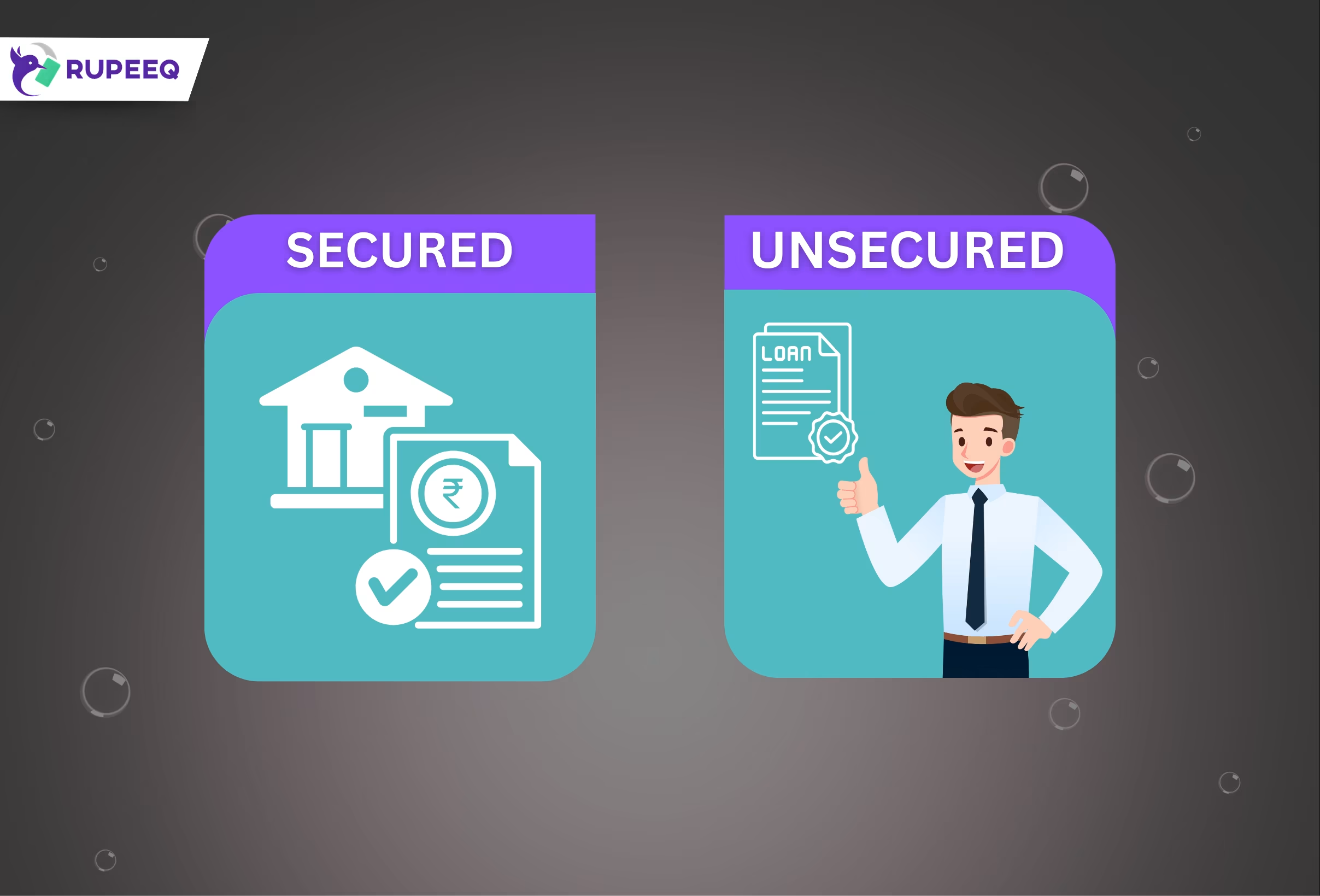
RupeeQ Tip: Always compare unsecured loans with at least one secured option before deciding. In many cases, secured loans such as gold loans come with significantly lower interest rates, which can reduce your total repayment even if the loan structure looks similar.
3. Choose the Right Loan Tenure to Avoid Overpaying
Loan tenure is where most of the hidden cost sits. It directly controls how much interest you end up paying, even if the rate looks reasonable.
A longer tenure reduces your EMI, which makes the loan feel affordable. But it also increases the total interest significantly. This is exactly how borrowers end up paying far more than expected.
A shorter tenure does the opposite. Your EMI is higher, but a larger portion of each payment goes toward the principal. This reduces the overall interest and helps you get out of debt faster.
Here is what you should keep in mind:
- Shorter tenure usually means lower total interest
- Longer tenure reduces EMI but increases total repayment
- Very long tenures can cancel out the benefit of consolidation
Choose a tenure that balances affordability with total cost
The goal is not to get the lowest EMI but to minimize how much you pay overall.
RupeeQ Tip: If the EMI fits your budget, always lean toward the shortest tenure possible. That is one of the simplest ways to make sure your consolidation loan actually saves money instead of increasing your debt.
4. Compare Lenders Side by Side
When you look at a single loan offer, the EMI feels reasonable and the interest rate seems competitive. But without context, you have no way to know if it’s actually the best option.
The only way to choose correctly is to compare multiple offers side by side.
Create a simple comparison using 2–3 loan options and look at them together. When placed next to each other, differences in total repayment, tenure, and flexibility become much clearer.
Focus on:
- Total repayment difference between lenders
- How tenure changes the overall cost
- Which lender allows low-cost prepayment
- Hidden conditions that may not be obvious upfront
This side-by-side approach exposes trade-offs that are easy to miss otherwise.
For example, one lender may offer a slightly lower EMI but extend the tenure by a year, increasing your total repayment significantly. Another may have a higher EMI but save you money overall.
When you compare loans this way, the decision becomes objective.
If you are serious about how to choose Personal Loan for Debt Consolidation, never evaluate a loan on its own. Always compare at least two options before deciding.
5. Check Eligibility Factors That Affect Your Loan Cost
Your loan terms are directly tied to how lenders assess your risk. Small differences in your profile can change your interest rate, fees, and even the offers you qualify for.
The most important factor is your credit score. A higher score signals lower risk, which usually translates into better interest rates. Even a small improvement in your score can reduce your total borrowing cost over time.
Income stability also plays a key role. Lenders look at how consistent your earnings are and whether you can comfortably handle the EMI. A strong income profile can help you negotiate better terms.
Your existing obligations matter just as much. If a large portion of your income is already committed to EMIs, lenders may either offer higher rates or limit your loan amount. This is typically measured through your debt-to-income ratio.
Here is what lenders evaluate:
- Credit score and repayment history
- Monthly income and job stability
- Existing EMIs and total debt load
- Debt-to-income ratio
Before applying, it is worth making small improvements where possible. Paying down a portion of your existing debt or correcting errors in your credit report can help you qualify for better rates.
RupeeQ Tip: If you are serious about how to choose Personal Loan for Debt Consolidation, do not treat eligibility as a checkbox. It directly impacts how much you will end up paying.
6. Avoid Common Debt Consolidation Mistakes That Increase Costs
Debt consolidation only works if you avoid the mistakes that quietly increase your total repayment. Most borrowers do not lose money on the loan itself. They lose it in how they use it.
One of the most common mistakes is not closing or controlling old credit lines after consolidation. If you clear your credit cards but continue using them, you end up with both the new loan and fresh debt. That defeats the entire purpose.
Another issue is borrowing more than required. Lenders may offer a higher amount based on your eligibility, but taking extra funds increases your interest burden from day one.
Ignoring loan terms is another costly error. Prepayment charges, foreclosure restrictions, and hidden fees can limit your ability to reduce interest later.
Watch out for these mistakes:
- Keeping credit cards active and building new debt after consolidation
- Taking a higher loan amount than required
- Choosing loans with high prepayment or foreclosure charges
- Prioritizing instant approval over total cost
- Ignoring the total repayment amount
Debt consolidation should simplify and reduce your debt, not restructure it into something more expensive.
If you are applying how to choose Personal Loan for Debt Consolidation correctly, avoiding these mistakes is just as important as choosing the right loan.
When a Personal Loan Is Not the Right Debt Consolidation Option
A personal loan works well for consolidation, but it is not always the cheapest route. In some cases, it can actually increase your total repayment.
If most of your debt is on high-interest credit cards, a balance transfer with a 0 percent introductory APR can be more cost-effective. It gives you a window to pay down the principal without interest.
If you have access to secured options like a loan against property or fixed deposits, these typically come with lower rates than personal loans. That can significantly reduce your total cost.
You should also review your existing loans. If some of them already have low interest rates, consolidating them into a higher-rate personal loan may not make financial sense.
Consider alternatives if:
- Your debt is mainly high-interest credit card balances
- You qualify for a 0 percent balance transfer offer
- You can access lower-interest secured loans
- Your current loans already have low rates
RupeeQ Tip: If your debt is spread across multiple credit cards, prioritize clearing the highest-interest balances first, even before consolidating everything. This reduces interest leakage while you finalize the right loan structure.
How to Calculate If You Are Actually Saving Money
At this stage, the decision should be based on a clear comparison of total cost, not on EMI or approval speed. Debt consolidation only works when the new loan reduces the overall amount you will repay.
To evaluate this, you need to calculate two things. The total remaining cost of your current debts, and the total cost of the new personal loan.
Consider a simple scenario. You have ₹8,000 in credit card debt at 22 percent and another ₹5,000 personal loan at 14 percent. If you continue with these obligations over their remaining tenure, your combined repayment may reach approximately ₹16,500, including interest.
Now compare this with a consolidation offer. You take a personal loan of ₹13,000 at 15 percent for four years, with a 2 percent processing fee. The total repayment in this case comes to around ₹17,200.
The comparison can be expressed clearly:
Savings = Total current repayment − Total new loan repayment
In this example, the result is negative, which means the consolidation increases your total cost instead of reducing it.
This is the most reliable way to evaluate any offer. It removes the bias created by lower EMIs and focuses the decision on actual repayment.
For anyone evaluating how to choose Personal Loan for Debt Consolidation, this calculation ensures that the decision is based on measurable savings, not perceived affordability.
Conclusion
Choosing the right loan for consolidation is less about finding the lowest EMI and more about controlling the total cost of your debt. Every decision point, from identifying the right loan amount to evaluating APR, tenure, and fees, ultimately comes down to one outcome. Are you paying less overall or not?
Most borrowers focus on approval speed or monthly affordability and overlook how small differences in rate, tenure, or charges can significantly increase total repayment. That is where overpaying happens.
If you approach this systematically, the decision becomes much clearer. Understand your current debt, compare total repayment instead of just EMI, choose a tenure that limits interest, and validate the numbers before committing.
That is the core of how to choose Personal Loan for Debt Consolidation. It is not about simplifying payments alone. It is about reducing your financial burden in a measurable way.
FAQs
1. What is a good interest rate for a Personal Loan for Debt Consolidation in India?
For borrowers with strong credit profiles, personal loan interest rates in India typically range between 10 percent to 14 percent. However, the exact rate depends on your credit score, income stability, and existing obligations. Always compare APR and total repayment instead of focusing only on the interest rate.
2. Does debt consolidation affect my credit score in India?
In the short term, applying for a new loan may cause a slight dip due to hard inquiries. However, in the long run, consolidation can improve your credit score if it helps you make consistent, on-time payments and reduces your credit utilisation.
3. Is it better to choose a shorter or longer tenure for a consolidation loan?
A shorter tenure usually results in lower total interest, even though the EMI is higher. A longer tenure reduces monthly payments but increases overall repayment. The right choice depends on your cash flow, but from a cost perspective, shorter tenures are generally more efficient.
4. Can I prepay a personal loan in India without penalties?
Many lenders allow prepayment, but some charge foreclosure or part-payment fees, especially in the initial months. It is important to check these terms before choosing a loan, as prepayment flexibility can significantly reduce your total interest.
5. Can I use platforms like RupeeQ to find better debt consolidation options?
Yes, digital lending platforms like RupeeQ.com can help streamline the process of evaluating loan options by giving you access to multiple lenders and faster approvals. Instead of approaching each lender individually, you can compare available offers, check eligibility, and move forward with options that align with your repayment goals.