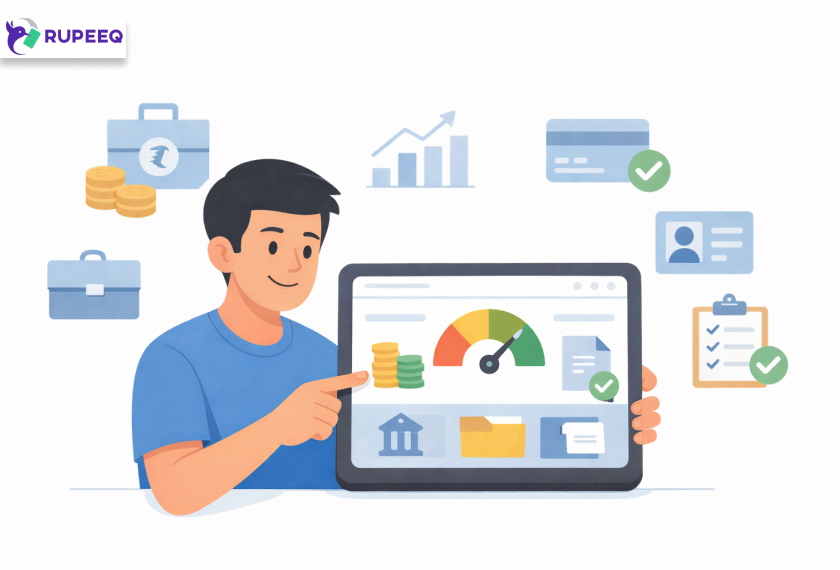
Personal loans have become one of the fastest-growing credit products in India. Whether it’s covering medical expenses, funding a wedding, renovating a home, or consolidating debt, many borrowers prefer personal loans because they require no collateral and can be approved quickly.
According to the Reserve Bank of India’s Financial Stability Report, personal loans recorded over 20% year-on-year growth in India’s retail credit segment, making them one of the fastest-expanding categories of consumer lending.
Despite the convenience of quick applications and instant approvals, lenders do not approve every request automatically. Banks and NBFCs evaluate several financial factors before approving a loan. Your monthly salary, credit score, existing debts, employment stability, and repayment history all influence whether your application gets approved and how much you can borrow.
This is where understanding personal loan eligibility in India becomes important. Eligibility criteria determine not only whether you qualify for a loan but also the interest rate and loan amount offered by the lender. By knowing how lenders assess personal loan eligibility in India, borrowers can prepare their finances, avoid unnecessary rejections, and improve their chances of securing better loan terms.
What is Personal Loan Eligibility?
Personal loan eligibility in India refers to the criteria lenders use to determine whether a borrower qualifies for a personal loan. Since personal loans are unsecured and do not require collateral, banks and NBFCs rely on a borrower’s financial profile to assess repayment capacity.
Lenders typically evaluate factors such as monthly income, credit score, employment stability, age, and existing financial obligations. These details help them decide whether to approve the loan, how much to lend, and what interest rate to offer.
Understanding personal loan eligibility in India before applying can help borrowers assess their chances of approval and avoid unnecessary loan rejections.
Key Factors That Affect Personal Loan Eligibility
1. Minimum Salary Required for Personal Loan in India
Income is a key factor that lenders evaluate when assessing personal loan eligibility in India. Your monthly salary helps banks determine whether you can comfortably repay the loan through EMIs.
Most banks require a minimum monthly salary between ₹15,000 and ₹25,000 for salaried applicants, although the exact requirement varies by lender and city. Applicants working in metro cities or employed by large companies may find it easier to qualify.
Lenders also use income to decide the loan amount. In most cases, total EMIs should not exceed 40–50% of your monthly income, ensuring borrowers can manage repayments without financial stress.
A stable and higher income generally improves personal loan eligibility in India and increases the chances of qualifying for a larger loan amount with better interest rates.
2. Credit Score Requirements for Personal Loans
Credit score is another critical factor that lenders consider when evaluating personal loan eligibility in India. It reflects your borrowing history and how responsibly you have repaid past loans or credit card dues.
Most banks prefer applicants with a credit score of 750 or higher, as it indicates a strong repayment track record. Borrowers with higher scores are more likely to receive faster approvals and lower interest rates.
Applicants with lower scores may still qualify for a loan, but lenders may offer smaller loan amounts or charge higher interest rates to offset the risk.
Maintaining timely EMI payments, keeping credit card balances low, and avoiding multiple loan applications can help improve your credit profile and strengthen personal loan eligibility in India.
3. Age and Employment Criteria
Lenders also evaluate age and employment stability when assessing personal loan eligibility in India. These factors help determine how stable a borrower’s income is and how long they will be able to repay the loan.
Most banks offer personal loans to applicants between 21 and 60 years of age. Salaried professionals usually need a minimum of 6–12 months of work experience, along with a few months in their current job. Stable employment indicates consistent income, which improves approval chances.
Self-employed applicants can also qualify for loans, but lenders typically require proof of steady business income and financial records such as income tax returns.
Meeting these basic age and employment requirements can significantly strengthen personal loan eligibility in India and make the loan approval process smoother.
Documents Required for Personal Loan
When applying for a personal loan, lenders require certain documents for personal loans to verify your identity, address, and financial stability. Proper documentation helps banks assess risk and confirm the information provided in the loan application. Submitting complete and accurate paperwork also speeds up the approval process and strengthens personal loan eligibility in India.
Identity Proof
Identity verification is mandatory for all loan applicants as part of the Know Your Customer (KYC) process required by financial institutions in India. Borrowers can typically submit documents such as a PAN card, Aadhaar card, passport, voter ID, or driving license. Among these, PAN and Aadhaar are the most commonly requested documents because they help lenders verify identity and track credit history.
Address Proof
Lenders also require proof of residence to confirm the applicant’s current address. Commonly accepted documents include Aadhaar card, passport, utility bills, rental agreements, or bank statements that clearly show the borrower’s address. Accurate address verification helps lenders maintain proper records and complete regulatory compliance.
Income Proof
Income documents help lenders evaluate repayment capacity, which is a key factor in determining personal loan eligibility in India. Salaried applicants usually need to submit recent salary slips, bank statements for the last three to six months, and Form 16. Self-employed individuals may need to provide Income Tax Returns (ITR), business financial statements, or bank statements to demonstrate stable income.
Providing clear and updated documents allows lenders to assess financial stability more effectively and process the loan application faster.
How Lenders Calculate Personal Loan Eligibility
Before approving a loan, lenders use internal evaluation models to assess whether a borrower can comfortably repay the amount. These calculations help determine the loan amount, interest rate, and repayment terms. Understanding how lenders evaluate borrowers can help improve personal loan eligibility in India.
EMI-to-Income Ratio
One of the most common methods lenders use is the EMI-to-income ratio, also known as the debt-to-income ratio. This measures how much of your monthly income is already committed to loan repayments. In most cases, lenders prefer that total EMIs do not exceed 40–50% of your monthly income. If a large portion of your income is already going toward existing loans, your eligibility for a new personal loan may decrease.
Existing Debt Obligations
Lenders also examine your current financial commitments, including credit card balances, home loans, car loans, and other personal loans. Higher outstanding debt increases financial risk and can reduce the loan amount you qualify for.
Credit History Assessment
Your credit report provides lenders with a detailed view of your past borrowing behavior. Consistent EMI payments, responsible credit usage, and a clean repayment record significantly strengthen Personal Loan Eligibility in India, while missed payments or defaults can negatively affect approval chances.
How to Check Personal Loan Eligibility Online
Many banks and lending platforms now offer online tools that allow borrowers to quickly check personal loan eligibility in India before submitting a formal application. These eligibility calculators give an estimate of the loan amount you may qualify for based on your financial details.
To check eligibility, borrowers typically need to enter basic information such as monthly income, employment type, age, city of residence, and existing loan obligations. The tool then analyzes these inputs using common lending criteria and provides an estimated loan amount and EMI.
Checking eligibility online has several advantages. It helps borrowers understand whether they meet basic lender requirements and reduces the risk of loan rejection. It also allows applicants to compare different loan amounts and repayment tenures before applying.
Using these tools can give borrowers a clearer picture of their financial standing and help them improve personal loan eligibility in India before submitting a loan application.
Conclusion
Understanding personal loan eligibility in India is an important step before applying for any loan. Lenders evaluate several factors, such as income, credit score, employment stability, age, and existing financial obligations, to determine whether a borrower can repay the loan comfortably. These criteria also influence the loan amount and interest rate offered.
Borrowers who maintain a stable income, a strong credit score, and low existing debt usually have higher approval chances. Preparing the required documents and checking eligibility in advance can also help avoid unnecessary loan rejections.
Before submitting an application, it is always advisable to review your financial profile and ensure you meet the basic lender requirements. A clear understanding of personal loan eligibility in India can help borrowers make informed decisions and improve their chances of securing better loan terms.
FAQs
What is the minimum salary required for a personal loan in India?
Most lenders require a minimum monthly salary between ₹15,000 and ₹25,000 for salaried applicants. However, the exact requirement may vary depending on the lender, city, and employer profile.
What credit score is needed for a personal loan?
A credit score of 750 or above is generally considered ideal by most banks and NBFCs. Higher scores improve approval chances and may help borrowers qualify for lower interest rates.
Can I get a personal loan with a low credit score?
It may still be possible to get a loan with a lower credit score, but lenders may offer smaller loan amounts or charge higher interest rates due to the increased risk.
How can I check my personal loan eligibility?
You can check personal loan eligibility in India using online eligibility calculators available on many bank and lending platforms. These tools estimate eligibility based on income, employment details, and existing financial obligations.
Which documents are required for a personal loan?
Commonly required documents include PAN card, Aadhaar card, address proof, salary slips, bank statements, and income tax returns (for self-employed applicants). These documents help lenders verify identity and repayment capacity.