For salaried professionals, loans are often a part of financial planning. Home loans, car loans, personal loans, and credit card EMIs help manage large expenses without disturbing savings. However, when EMIs are missed due to job changes, medical emergencies, or poor budgeting, the impact goes far beyond late payment penalties.
Late EMIs can significantly damage your credit score, making future loans expensive or difficult to obtain. The good news is that credit damage is not permanent. With the right recovery plan and disciplined financial behaviour, salaried borrowers can rebuild their creditworthiness and restore lender confidence.
How Late EMIs Impact Your Credit Score
A credit score reflects your repayment behaviour. Lenders use it to assess how reliably you manage borrowed money. When an EMI is delayed, it signals repayment risk.
Even a single missed EMI can stay on your credit report for years and reduce your score.
Immediate Consequences of Missing EMIs
- Drop in credit score
- Late payment penalties and extra interest charges
- Reduced chances of future loan approvals
- Higher interest rates on new loans
- Negative impact on credit history
The longer the delay, the more severe the damage.
Understanding Days Past Due and Credit Damage
Lenders report missed payments based on the number of days overdue. Higher delays create stronger negative signals.
EMI Delay Classification
| Delay Duration | Credit Impact |
| 1 to 30 days | Minor score dip |
| 31 to 60 days | Moderate impact |
| 61 to 90 days | Serious credit damage |
| Above 90 days | Considered default |
Delays beyond 30 days can make lenders cautious, especially for unsecured loans.
Common Reasons Salaried Borrowers Miss EMIs
EMI delays do not always happen due to irresponsibility. Many salaried individuals face genuine financial disruptions.
Some frequent causes include:
- Sudden medical expenses
- Temporary job loss or salary delays
- Poor expense planning
- Overdependence on credit cards
- Multiple EMIs exceeding repayment capacity
Recognizing the reason behind missed payments is the first step toward recovery.
Step-by-Step Recovery Plan to Rebuild Credit Score
1. Clear Pending Dues Immediately
The first priority should be clearing overdue EMIs. The longer dues remain unpaid, the deeper the credit damage becomes.
If paying the full amount is difficult, consider negotiating part-payment arrangements with the lender to regularize the account.
2. Avoid Further Delays at All Costs
Consistency in repayments is the strongest signal of financial discipline. Setting up auto-debit instructions ensures that future EMIs are never missed.
Even if your credit score has fallen, timely repayments help rebuild it gradually.
3. Reduce Overall Debt Burden
High repayment obligations increase the chances of further delays. Lowering debt pressure improves financial stability.
Practical Debt Reduction Measures
- Close small outstanding loans
- Avoid taking new unnecessary credit
- Convert high-interest credit card dues into structured loans
- Consider debt consolidation if managing multiple EMIs is difficult
RupeeQ Tip: If you are juggling several EMIs, exploring debt consolidation options through RupeeQ can simplify repayments and reduce financial pressure.
4. Maintain Low Credit Utilization Ratio
Credit utilization refers to the percentage of your available credit limit that you are using. High usage indicates credit dependency.
For example, if your credit card limit is ₹2,00,000 and your outstanding balance is ₹1,40,000, your utilization is 70 percent. This negatively affects your score.
Experts recommend keeping utilization below 30 percent to show healthy credit behaviour.
5. Monitor Your Credit Report Regularly
Credit reports may sometimes contain errors such as incorrect payment status or duplicated accounts. Identifying such mistakes early helps prevent unnecessary score drops. Reviewing reports also allows you to track recovery progress.
RupeeQ Tip: Salaried borrowers can check their credit score for free on RupeeQ and get RupeeQ ACE insights that highlight key factors affecting their credit health.
Example: Credit Recovery Journey of a Salaried Borrower
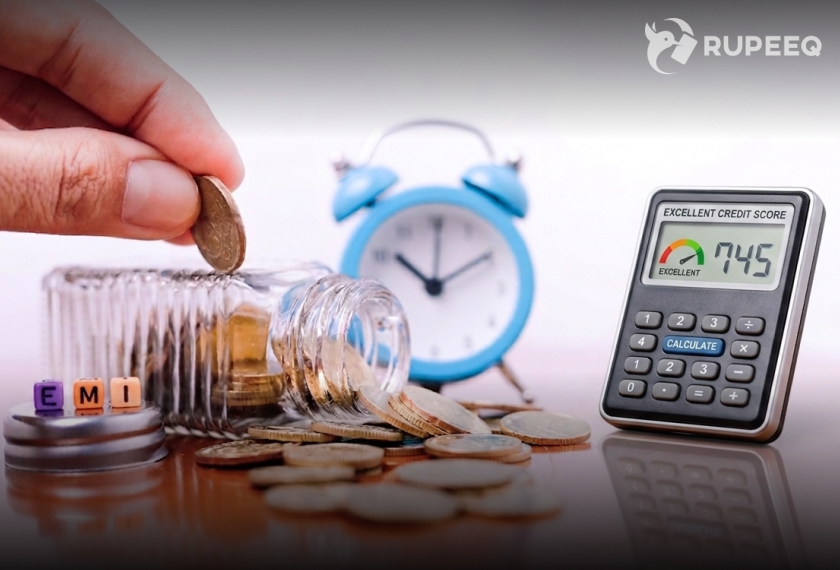
Consider a professional with a credit score of 780 who missed two EMIs due to salary delays.
Immediate impact
- Score dropped to 690
- Loan eligibility reduced
- New loan interest rates increased
Recovery steps taken
- Cleared pending dues within two months
- Set up auto-debit for all EMIs
- Reduced credit card usage
- Avoided new loan applications for six months
After 12 months of disciplined behaviour
- Score improved to 745
- Eligible for better loan offers
- Reduced borrowing costs
This shows that consistent financial discipline can gradually repair credit damage.
When Should You Consider Debt Consolidation After EMI Delays
If missed payments occurred due to managing multiple loans, debt consolidation can provide structured relief.
Consolidation reduces repayment complexity by combining multiple loans into one EMI. This lowers the chances of missing due dates and improves repayment discipline.
It is particularly helpful if:
- You are managing three or more EMIs
- High-interest debts are increasing financial pressure
- Repayment tracking is becoming complicated
How RupeeQ Supports Credit Score Recovery
RupeeQ helps borrowers understand their credit position before applying for new loans. Instead of guessing eligibility, users can make informed financial decisions.
RupeeQ’s Helpful Tools for Borrowers
- Free credit score access
- RupeeQ ACE advanced credit insights
- EMI calculators for repayment planning
- Comparison of regulated lender options
- Guidance on structured debt solutions
RupeeQ Tip: Reviewing your credit profile on RupeeQ before applying for a loan helps avoid unnecessary rejections that can further impact your credit score.
Long-Term Habits That Protect Your Credit Score
Rebuilding credit is not just about clearing dues. It requires sustained financial discipline.
Healthy credit habits include paying EMIs before due dates, maintaining balanced credit usage, avoiding impulsive borrowing, and planning expenses in advance.
Building emergency savings also reduces dependence on credit during financial disruptions.
Conclusion
Late EMIs can negatively affect your credit score, borrowing ability, and financial confidence. However, credit damage is not permanent. With timely corrective actions and disciplined repayment behaviour, salaried borrowers can gradually rebuild their creditworthiness.
A structured recovery plan that includes clearing dues, managing debt responsibly, monitoring credit reports, and avoiding unnecessary borrowing can restore financial stability.
Platforms like RupeeQ.com further support this journey by offering credit insights, repayment planning tools, and transparent loan comparisons. By taking proactive steps today, borrowers can rebuild their credit profile and secure better financial opportunities in the future.