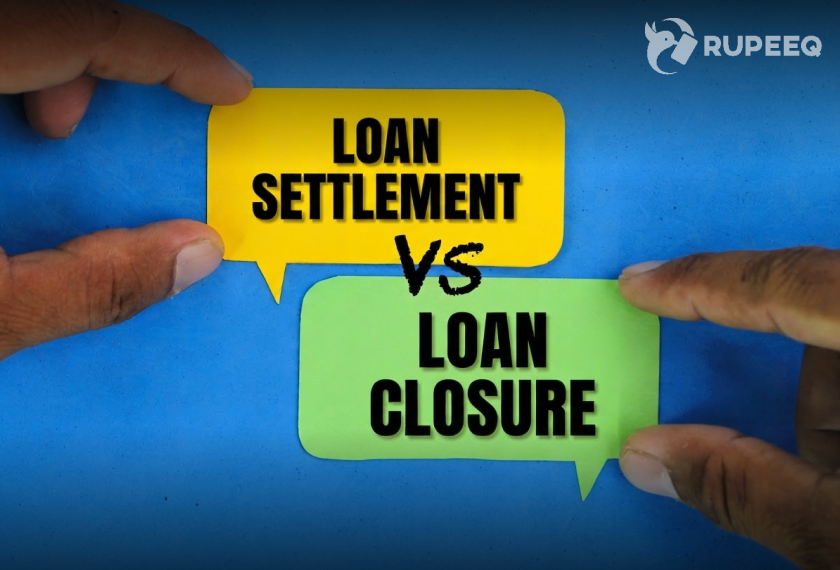
Two words on your credit report decide how the next lender sees you. One says “closed.” The other says “settled.” They look almost identical on a bank letter, but they are not the same thing at all.
If you’re staring at a loan you can’t fully repay, understanding loan settlement vs loan closure isn’t optional. It’s the one decision that shapes your credit score for years.
What Is Loan Closure?
Personal Loan closure happens when you repay the entire outstanding amount, exactly as agreed. Every EMI, every rupee of interest, paid in full. Once the last payment clears, your lender marks the account “closed” and reports it to the credit bureau that way.
This is the clean exit. Your credit history shows a fully repaid loan, and it works in your favor the next time you apply for credit.
What Is Loan Settlement?
Loan settlement is different. It happens when you can’t pay the full amount, and the lender agrees to accept less than what you owe as final payment.
The lender writes off the remaining balance and reports the account as “settled,” not “closed.” That single word change carries weight far beyond the paperwork.
Loan Settlement vs Loan Closure: The Core Difference
| Factor | Loan Closure | Loan Settlement |
| Amount paid | Full outstanding amount | Partial, negotiated amount |
| Credit report status | “Closed” | “Settled” |
| Credit score impact | Minimal to none | Sharp, long-lasting drop |
| Visibility to future lenders | Normal repayment history | Flagged as a red flag account |
| Time on credit report | Standard reporting cycle | Up to 7 years |
The gap between these two outcomes is exactly why lenders read your credit report line by line before approving anything.
Why the “Settled” Tag Costs You More Than You Think
A settled loan doesn’t just sit quietly on your report. It actively works against you.
According to Tata Capital’s analysis of credit bureau data, a settled loan can pull your CIBIL score down by 75 to 100 points, and the tag stays visible on your report for up to seven years. That’s not a minor dent.
It’s the difference between an easy approval and a flat rejection at your next lender.
- Future lenders see “settled” as a sign you didn’t honor the original agreement
- Interest rates offered to you go up, even if you do get approved
- Loan amounts sanctioned tend to be smaller and more conservative
- Recovery of your score takes months of disciplined repayment elsewhere
If your repayments have already started slipping, it helps to recognize the signs you’re heading into a debt trap before settlement becomes your only exit.
Steps to Close a Loan the Right Way
Closing a loan cleanly isn’t complicated, but skipping a step can leave you with an incomplete record.
Step 1: Pay Off the Full Outstanding Balance
Clear every EMI, including any pending interest or late fees. Partial payments don’t count as closure.
Step 2: Consider Prepaying If You Can Afford It
If you have surplus funds, you can choose to prepay a Personal Loan ahead of schedule. This shuts the account faster and reduces the total interest you pay.
Step 3: Collect the No Objection Certificate
Once the loan is paid in full, ask your lender for a written NOC or closure letter. This document is your proof that the account was closed, not settled.
Step 4: Confirm the Update on Your Credit Report
Closure updates can take 30 to 45 days to reflect. Check your report after that window to confirm the status reads “closed.”
When Loan Settlement Becomes the Only Option
Sometimes closure genuinely isn’t possible. Job loss, a medical emergency, or a sudden drop in income can make full repayment unrealistic, especially in metro cities like Mumbai or Noida.
If you’re at that point, the way you settle still matters:
- Talk to your lender before you default, not after
- Ask for the settlement terms in writing before agreeing to anything
- Negotiate the highest amount you can realistically pay, not the lowest offer
- Get a settlement letter once the payment clears
RupeeQ Tip: Before you agree to any settlement, check your credit score for free on RupeeQ ACE. Knowing your exact starting point helps you understand how much room you have to negotiate, and how far you’ll need to rebuild afterward.
What Happens After You Settle a Loan
The moment a settlement is marked on your report, it starts working differently than a closed account would.
The difference becomes clearer when you look at how your credit score changes after becoming debt free through full repayment. Closure rewards you. Settlement restricts you.
RupeeQ Tip: Always request the settlement letter in physical or digital form the day you make the final payment. Without it, disputes over the account status can drag on for months.
How to Recover After a Loan Settlement
A settled loan isn’t a life sentence on your credit report. It’s a setback you can work through.
- Pay every other EMI and credit card bill on time, without exception
- Keep credit card utilization under 30% of your limit
- Avoid applying for new credit for at least 6 to 12 months
- Check your report periodically and raise disputes for any errors
Recovery is slower than the fall. Your score may take time to recover, and knowing why credit scores climb back slower than they fall can help set realistic expectations instead of frustration.
For a practical roadmap, these steps to fix a bad credit score break the process into manageable actions.
Loan Settlement vs Loan Closure: Quick Decision Guide
- Can you pay the full amount, even with a delay? Choose closure.
- Is your income permanently reduced with no repayment path? Settlement may be necessary.
- Do you have any asset or co-applicant who can help? Explore that before settling.
- Already settled a loan? Focus on rebuilding rather than dwelling on it.
Even with a settlement on record, getting a Personal Loan with a low CIBIL score isn’t impossible. It just takes a more targeted approach to the right lender.
Final Thoughts
This decision isn’t just about clearing an account. It’s about what your credit report says about you for the next seven years.
Closure protects your score and keeps future borrowing simple. Settlement should stay a last resort, used only when repayment genuinely isn’t possible, and handled carefully when it is.
Compare Personal Loan offers that fit your actual repayment capacity on RupeeQ.com, so you close accounts on your terms instead of settling for less.
FAQs
-
Is settlement worse than closure for my credit score?
Yes. Closure has little to no negative impact, while settlement can drop your score by 75 to 100 points and stay visible for up to seven years.
-
Can I convert a settled loan back to closed?
No. Once a loan is reported as settled, the status cannot be changed to closed, even if you later pay the remaining balance.
-
Will loan settlement affect my chances of getting a home loan later?
Yes, significantly. Housing lenders review settlement history closely, especially for larger loan amounts.
-
How long should I wait before applying for a new loan after settlement?
Most experts recommend waiting at least 6 to 12 months while rebuilding your score through timely payments elsewhere.
Disclaimer: Interest rates, processing fees, and eligibility criteria vary by lender, applicant profile, and RBI guidelines. This article is for general informational purposes only. Always verify current terms before applying.