Your credit score is 650. You need a Personal Loan. And every lender’s website you’ve checked lists “750+” as the minimum. Before you close that tab, here’s what most borrowers don’t know: a 650 score isn’t a door slammed shut. It’s a door that needs the right key.
A Personal Loan with 650 Credit Score is indeed hard and makes lenders cautious, but it doesn’t make approval impossible. You just need to know which lenders to approach and how to strengthen the rest of your application.
Why 650 Is a Tricky But Workable Score
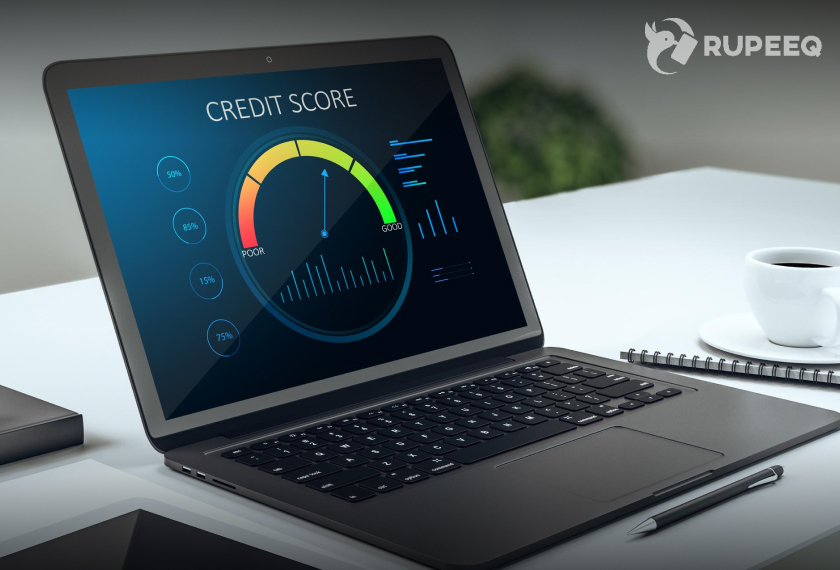
Credit bureaus in India classify scores between 600 and 699 as “fair”, not bad enough to be auto-rejected by every lender, but not strong enough to breeze through traditional bank approvals.
The good news?
Banks are not your only option, and they’re often not the right first step.
According to CRIF High Mark and reported by BFSI, NBFCs have steadily grown their share of Personal Loan disbursals, and many of them use broader eligibility criteria beyond just the credit score.
That means your income stability, repayment behavior, and employer profile carry real weight in the decision.
Can You Actually Get a Personal Loan with a 650 Credit Score?
Yes, but the approval depends on what surrounds that number.
Lenders look at the full picture:
- Your FOIR (Fixed Obligation to Income Ratio): If your existing EMIs consume less than 40-50%* of your income, your profile looks manageable despite the score.
- Income stability: Salaried applicants with consistent salary credits across 6 months often get more flexibility than variable-income applicants.
- Employer category: Working at a listed company, PSU, or MNC adds credibility to your application.
- Loan amount requested: Asking for ₹1-2 lakh at a 650 score is very different from asking for ₹5 lakh.
RupeeQ Tip: Before applying anywhere, check your free credit score on RupeeQ ACE. You’ll also see what’s dragging your score down, so you know exactly what lenders will flag.
Steps to Get Approved for a Personal Loan with a 650 Credit Score
As mentioned earlier, Personal Loan with 650 may feel slightly challenging, but it’s definitely possible with the right approach. Here’s what your options look like when applying for a Personal Loan with a low CIBIL score.
1. Apply to NBFCs, Not Banks First
Most public sector banks and large private banks set their floor at 700-750. Applying there for a Personal Loan with 650 score almost guarantees a rejection and a hard inquiry on your report.
NBFCs like Muthoot Finance, Poonawalla Fincorp, and smaller digital lenders are more flexible. Some work with scores as low as 600-630, provided your income and FOIR are in good shape.
Start with lenders whose published minimum matches your actual score. One targeted application beats five scattered ones.
2. Lower Your FOIR Before You Apply
FOIR is the single easiest thing you can improve before applying. Lenders prefer FOIR under 50%*. If yours is higher, close the smallest active EMI you have.
Steps to bring it down fast:
- List all current monthly EMIs
- Pay off any loan that’s nearly complete
- Avoid new credit card purchases or BNPL plans for 60 days before applying
Even eliminating one ₹1,500 monthly EMI shifts your eligible loan amount upward.
RupeeQ Tip: Use the free RupeeQ EMI Calculator to see what your current FOIR looks like and how your eligible amount changes if one EMI is cleared.
3. Request a Smaller Loan Amount
This one sounds obvious but most people skip it. A smaller loan at a 650 score is a lower risk for the lender. That math works in your favor.
If you need ₹3 lakh but can manage with ₹1.5 lakh, apply for the smaller amount. Once approved and repaid on time, your score improves and you can borrow more next time with a stronger profile.
4. Add a Co-Applicant with a Better Score
A co-applicant, usually a spouse, parent, or earning sibling, allows the lender to evaluate a combined profile. If their credit score is above 720 and their income is stable, your 650 stops being the primary number in the room.
Things to keep in mind:
- The co-applicant’s credit report is pulled and evaluated
- Both are equally liable for the loan
- A co-applicant with a poor score does not help, it can hurt
This works especially well if the co-applicant has a clean repayment history and low existing debt.
5. Show Your Full Income Picture
Many applicants present only their salary slips and miss the chance to show everything they actually earn.
If you have additional income sources, document them:
- Freelance or consulting income reflected in bank statements
- Rental income with a registered rental agreement
- Agricultural or business income supported by ITR filings
Presenting the complete picture can increase your chances of Personal Loan approval.
6. Offer Collateral If You Have It
Unsecured Personal Loans are harder to get at 650. A secured Personal Loan, where you pledge an FD, insurance policy, or gold, shifts the risk equation for the lender. Income requirements soften, interest rates drop, and approval becomes more accessible.
If you have an FD with a bank, a loan against it is often processed with minimal scrutiny on credit score.
What to Avoid When Your Score Is 650
These mistakes turn a difficult application into an impossible one:
- Applying to 4-5 lenders at once, each is a hard inquiry and brings your score down further.
- Hiding an existing loan, it shows up in your credit report regardless
- Asking for a loan amount clearly above your repayment capacity
- Submitting documents with mismatches (name, address, or employer inconsistencies)
A Quick Look at Your Options by Lender Type
| Lender Type | Score Flexibility | Key Requirement |
| PSU Banks | Low (typically 700+) | Stable salary, existing account |
| Private Banks | Moderate (680-700+) | Good FOIR, clean repayment history |
| NBFCs | Higher (600-650+) | Income stability, FOIR under 50%* |
| Digital Lenders | Highest | Bank statement analysis |
Will This Affect Your Score Further?
Applying for a loan does add one hard inquiry to your report, which can drop your score by a few points temporarily. That’s why applying to the right lender the first time matters more than it does at higher scores.
That’s where RupeeQ.com helps. Simply check your eligibility with a few basic details and instantly explore loan offers from multiple NBFCs that are ready to lend based on your profile
Once your loan is approved and you repay on time, that repayment history starts rebuilding your score. Most borrowers who take a Personal Loan at 650 and repay without defaults see a meaningful improvement within 6-9 months.
The Bottom Line
A Personal Loan with 650 Credit Score is not a long shot if you approach it correctly.
Targeting the right lenders, reducing existing debt load, showing complete income documentation, and considering a co-applicant are all moves that directly improve your chances.
The score is one variable. Everything else is within your control.
FAQs
-
What is the minimum Credit score for a Personal Loan?
Most banks require 700 or above. Several NBFCs and digital lenders work with scores from 600 to 650, provided other eligibility factors are strong.
-
Will a 650 Credit score always lead to a higher interest rate?
Yes, in most cases. Lenders price risk into interest rates. A 650 score typically means a higher rate than a 750+ score, but repaying the loan on time improves your score for future borrowing.
-
How long does it take to improve a 650 Credit score?
Consistent on-time payments and lowering credit utilization can show improvement in 3-6 months. Significant jumps usually take 6-12 months of disciplined credit behavior.
-
Can I get a Personal Loan with 650 credit score and low salary?
Yes, but it is more challenging. Focus on NBFCs with lower minimum income requirements, reduce your FOIR before applying, and consider a co-applicant to strengthen the application.