Four EMIs, three due dates, one salary. If that sounds like your month, consolidation has probably crossed your mind already.
But most people stall at the same place. Not the interest rate, not the tenure. The paperwork.
Here’s the part nobody tells you upfront. The documents required for a debt consolidation loan are mostly papers you already have sitting in your inbox. What trips borrowers up is the one set that’s unique to consolidation, and almost nobody prepares it in advance.
Why This Loan Needs More Paperwork Than a Regular One
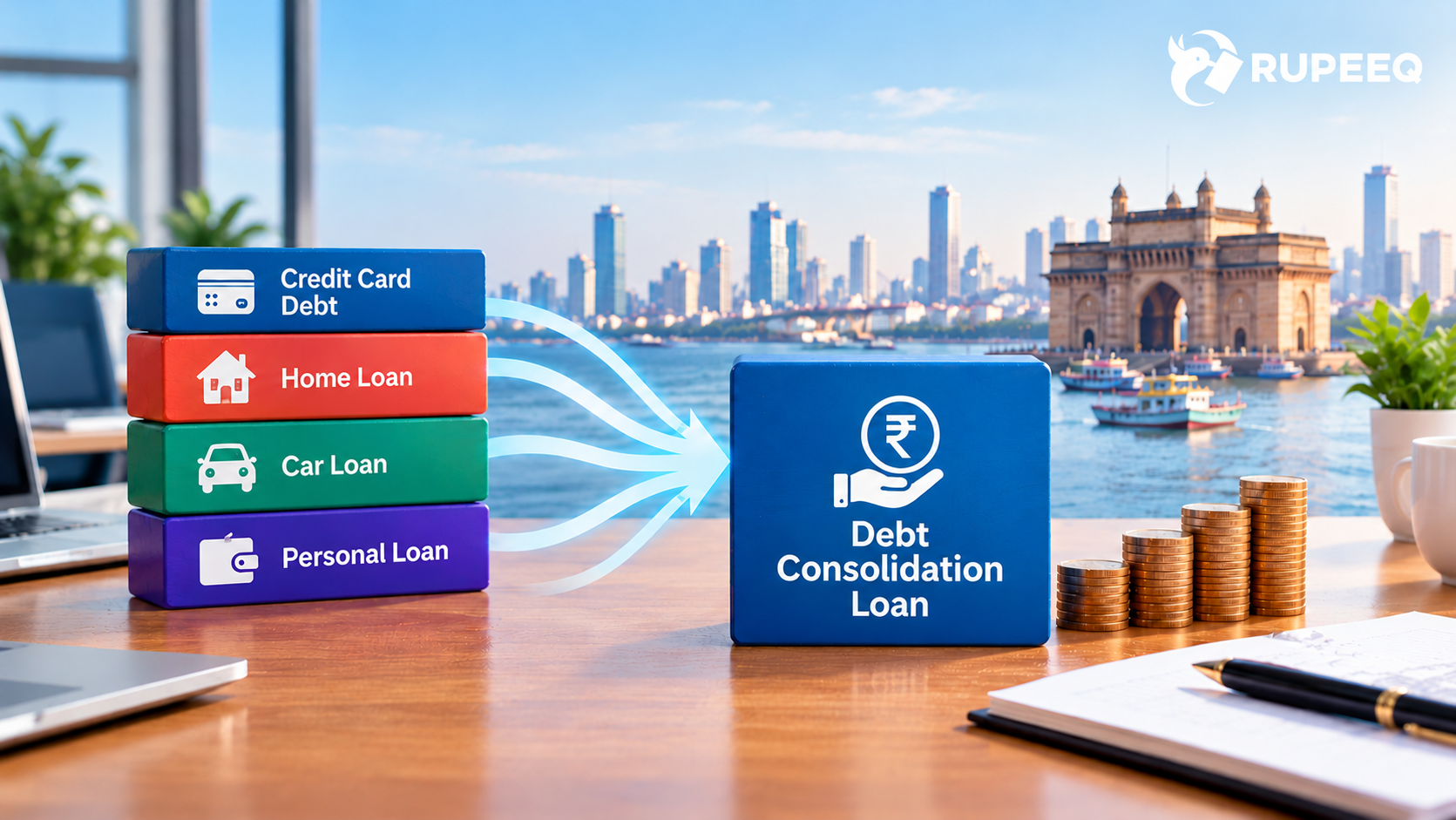
A consolidation loan doesn’t just fund you. It closes your existing loans and credit card balances.
So the lender isn’t only checking whether you can repay. They’re checking what they’re paying off on your behalf.
That means they need to see:
- Who your current lenders are and how much is still outstanding
- Whether those EMIs have been paid on time
- What it costs to close each account early
- Whether the new single EMI actually fits your income
Verification itself has gotten faster. India’s Account Aggregator network crossed 500 million fulfilled consents by September 2026, according to Sahamati, the RBI-recognized SRO for the framework.
In practice, that means many lenders now fetch your bank statements digitally once you approve the request. Fewer PDFs to hunt down, same scrutiny.
Documents Required for a Debt Consolidation Loan: The Core List
The base set overlaps heavily with the documents required for Personal Loans. The third category below is where consolidation differs.
Identity and Address Proof
- PAN card, mandatory for every application
- One government photo ID: Aadhaar, passport, voter ID, or driving license
- Address proof dated within the last 3 months
- Utility bill, registered rent agreement, or passport works as address proof
Income Proof
If you’re salaried:
- Last 3 months’ salary slips
- Last 6 months’ bank statements of your salary account
- Form 16 or your latest ITR
- Employment proof, such as an offer letter or employee ID
If you’re self-employed:
- ITRs for the last 2 years with computation of income
- 6 to 12 months of current account statements
- GST returns, where applicable
- Business registration or proof of continuity
Salary slips missing because of a cash-paid job or a new employer? You can still get a personal loan without a salary slip, though the lender will lean harder on your bank statements.
RupeeQ Tip: Check your credit score for free on RupeeQ ACE before you collect a single document. Your report lists every active loan and card in your name. That gives you a ready-made checklist of the debts you need statements for.
Proof of the Debts You’re Consolidating
This is the set borrowers almost always forget:
- Loan account statement for each active loan
- Latest statement for every credit card you want cleared
- Foreclosure or outstanding balance letter from each existing lender
- Sanction letters, if the lender asks for original terms
- Repayment track record showing EMIs paid so far
RupeeQ Tip: Ask each lender for a foreclosure letter, not a balance screenshot from the app. The letter states the exact payoff amount with charges, valid till a fixed date. Lenders accept it without follow-up queries.
Document Checklist by Borrower Type
Same loan, slightly different file. Here’s how the documents required for a debt consolidation loan split across profiles:
| Document | Salaried | Self-Employed |
| PAN card | Required | Required |
| Aadhaar or photo ID | Required | Required |
| Address proof (under 3 months) | Required | Required |
| Salary slips (3 months) | Required | Not applicable |
| Bank statements | 6 months, salary account | 6 to 12 months, current account |
| ITR | Form 16 or 1 year | 2 years with computation |
| Business proof | Not applicable | Registration or GST returns |
| Existing loan statements | Required | Required |
| Foreclosure letters | Required | Required |
What Actually Speeds Up Approval
Small things here save days:
- Download statements from net banking instead of photographing printouts
- Share passwords for any password-protected PDF upfront
- Keep your name spelled identically across PAN, bank, and application
- Make sure bank statements cover the full requested period without gaps
- Submit foreclosure letters while they’re still within validity
Clean files move faster through the personal loan verification process, because there’s nothing for the credit team to question. A few habits like these speed up your loan approval process more than any follow-up call will.
Document Mistakes That Delay Disbursal
- Leaving out one small loan, which still shows up in your credit report
- Address on the proof not matching the application form
- Blurred or cropped scans where account numbers are cut off
- Expired address proof, like a utility bill older than 3 months
- Submitting an old loan statement instead of the current month’s
Most of these are avoidable in ten minutes. They sit alongside the other mistakes to avoid while applying for a debt consolidation loan that quietly push your disbursal out by a week.
Keep It All in One Place With the RupeeQ App
Collecting documents is annoying. Collecting them separately for four different lenders is worse.
On the RupeeQ app, you upload your documents once and see matched offers from lenders that fit your profile. You can compare rates, check eligibility, and track your application status without repeating the paperwork.
It also lets you apply for a debt consolidation loan online without firing off multiple applications and collecting hard inquiries along the way.
Final Thought
The documents required for a debt consolidation loan aren’t complicated. They’re just scattered across your email, your bank app, and four different lender portals.
Spend one evening pulling everything together before you apply. Foreclosure letters, current statements, clean income proof.
Lenders approve the applications that leave them nothing to ask about. Yours can be one of them.
FAQs
-
Do I need foreclosure letters from every existing lender?
Most lenders ask for them, yes. The letter confirms the exact payoff amount, which is what your new lender disburses directly to close that account.
-
Can I apply if one of my credit cards is overdue?
You can apply, but disclose it. Lenders see overdue accounts in your credit report anyway, and hiding one usually leads to rejection rather than leniency.
-
Are physical copies needed, or is digital enough?
Digital is usually enough. Most NBFCs and digital lenders accept uploaded PDFs with digital KYC, and only ask for physical copies in rare verification cases.
-
How many months of bank statements do lenders ask for?
Salaried applicants are typically asked for 6 months. Self-employed borrowers may need up to 12 months of current account statements.
-
Will submitting more documents get me a bigger loan?
Not by volume, but by content. Documented side income, rent receipts, or ITRs showing higher total income can genuinely raise your eligible amount.
Disclaimer: Document requirements, eligibility criteria, interest rates, and processing terms may vary depending on the lender, applicant profile, RBI guidelines, and market conditions. The information shared in this article is for general informational purposes only and may change over time. Always verify the latest requirements with your lender before applying.