The discharge papers bring relief. The bills that follow bring a second kind of stress.
By the time treatment ends, most families are juggling pieces. A credit card swiped at the pharmacy, money borrowed from a relative, an EMI on a medical device, a small loan taken in a panic.
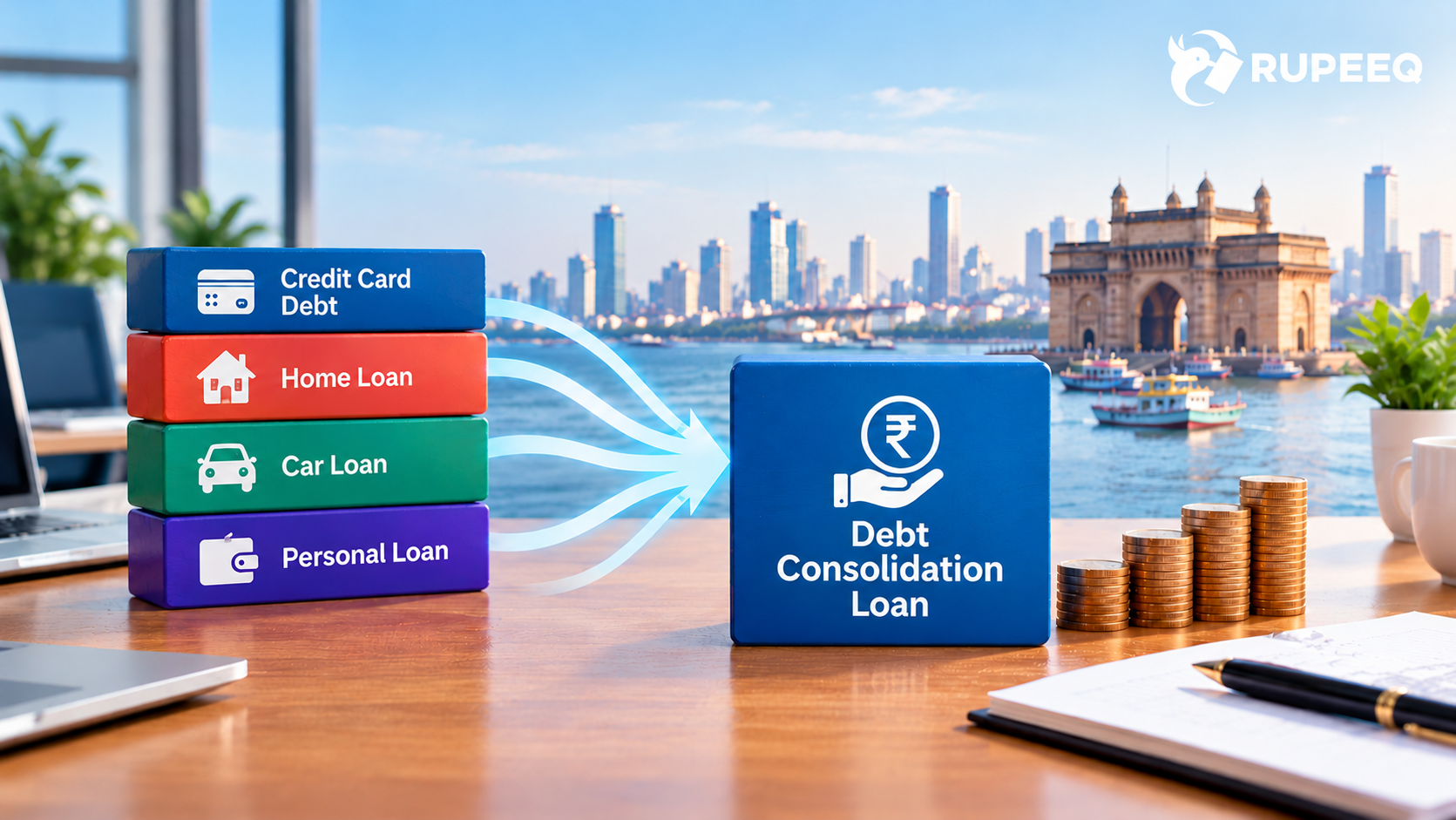
Each one has its own due date, its own interest rate, and its own way of reminding you it exists. Medical Debt Consolidation pulls all of it into a single loan with one EMI. Here is how to do it without making the debt heavier.
What Medical Debt Consolidation Actually Means
It is not a hospital scheme or a government waiver. It is one loan, large enough to clear every medical due you are currently carrying.
Once the payout lands, you settle each old balance and repay just one lender. The dues it usually covers:
- Credit card balances built up during hospitalization or pharmacy runs
- No-cost EMI plans taken on medical equipment or treatment packages
- A short-term loan borrowed mid-treatment at a high rate
- Informal borrowing from friends or family you want to return quickly
The goal is not to erase the debt. It is to make the repayment predictable.
Why Hospital Bills Turn Into Long-Term Debt
Treatment costs rarely arrive as one clean bill. They arrive in waves, and each wave gets funded differently.
Indian households still cover 43.4% of the country’s total health spending directly out of pocket, according to the Health Ministry’s National Health Accounts estimates for 2022-23. (Source: PIB, Ministry of Health and Family Welfare)
That is why medical debt spreads so easily:
- Insurance claims get partly rejected, leaving a gap you fund yourself
- Follow-up scans, medicines, and physiotherapy continue for months
- Credit cards get used first because they are instant, then carry 36% annual interest
- Income often dips at the same time, especially if the patient is the earner
RupeeQ Tip: Before you apply anywhere, run your numbers through RupeeQ’s free EMI Calculator. It shows exactly what a consolidated EMI looks like at different tenures, so you commit to a figure your monthly budget can actually hold.
Signs You Need Medical Debt Consolidation
Not every medical bill needs a consolidation loan. These signals suggest yours does:
- You are paying three or more separate medical dues every month
- Your credit card is only getting the minimum due, not the full balance
- You have missed a payment date simply because you lost track of it
- Your total EMIs now cross 50% of your monthly income
- You are borrowing fresh money to pay an older medical due
That last one is the clearest warning. It is the point where hospital bills stop being an expense and start becoming a cycle.
RupeeQ Tip: Write down every medical due with its outstanding amount and interest rate before you apply. Most people underestimate the total by 20% to 30%, then take a loan that falls short and leaves one expensive balance running.
How to Approach Medical Debt Consolidation Step by Step
Step 1: Add Up the Real Outstanding Amount
Include principal, accrued interest, and any late fees. Ask each lender for a foreclosure or settlement figure, not just the statement balance.
Step 2: Check Your Credit Score First
Missed payments during treatment may have already pulled your score down. Check it for free on RupeeQ ACE so you know which lenders will realistically approve you.
Step 3: Apply for One Loan That Covers Everything
A partial loan defeats the purpose. Applying for a debt consolidation loan online lets you compare offers without submitting separate applications to five lenders.
Step 4: Pick a Tenure You Can Sustain
A longer tenure lowers the EMI but raises total interest. Comparing the best loan tenure for debt consolidation helps you find the balance between monthly comfort and total cost.
Step 5: Close the Old Accounts Properly
Clear each due, then collect the no-dues certificate. An unclosed account keeps showing as active on your credit report for months.
Which Loan Works Best for Medical Debt Consolidation
The right product depends on what you are consolidating and what you own.
- Personal Loan: The most common route. No collateral, fast disbursal, and the amount can cover mixed dues. The interest rate on a consolidation loan here depends heavily on your credit score.
- Gold Loan: Lower rates if you have idle jewelry. Useful for smaller balances under ₹3 lakh.
- Loan against property: Suitable only for very large medical debt, since the tenure runs long and the asset is at risk.
- Top-up on an existing loan: Often the cheapest option if you already have a running home loan in good standing.
If your dues came from a single procedure rather than scattered sources, a straight personal loan for surgery may serve you better than consolidation.
Mistakes That Make Medical Debt Consolidation Backfire
Consolidation works only when the behavior changes with it. Common slip-ups:
- Keeping the cleared credit card active and swiping on it again
- Choosing a seven-year tenure for a debt you could clear in three
- Ignoring processing fees and prepayment charges while comparing offers
- Applying to several lenders in one week and collecting hard inquiries
- Consolidating without fixing the insurance gap that caused the debt
Reviewing the common mistakes to avoid while applying for a debt consolidation loan before you submit saves you from repeating them.
Manage It All From the RupeeQ App
Medical debt gets messy because it is scattered across lenders, apps, and paper receipts.
The RupeeQ app keeps the tracking in one place:
- Compare matched consolidation offers based on your actual profile
- Monitor your credit score as the old dues get cleared
- Calculate EMIs before you commit to a tenure
- Apply once instead of triggering multiple hard inquiries
Download the RupeeQ app and see where you stand before you borrow again.
Final Thought
Medical Debt Consolidation does not make hospital bills cheaper. It makes them manageable, which is usually the more urgent problem.
One EMI, one due date, and one interest rate give you room to rebuild. Handle the tenure and the old accounts correctly, and the debt stops following you around.
FAQs
-
Does Medical Debt Consolidation hurt my credit score?
There is a short dip from the new loan inquiry. After that, on-time EMIs and cleared balances usually help. Here is how consolidating debt affects your credit score over the longer term.
-
Can I consolidate medical bills if my insurance claim is still pending?
Yes. Many borrowers consolidate first and prepay part of the loan once the claim is settled. Check the prepayment charges before you sign.
-
What if my credit score dropped during treatment?
NBFCs are generally more flexible than banks at lower scores. Expect a higher rate and a smaller sanctioned amount.
-
Is consolidation better than paying each bill separately?
Only if the new rate is lower than your weighted average existing rate. If you are mostly carrying credit card debt at 36%, the answer is almost always yes.
-
Can I use a regular Personal Loan for hospital dues?
Yes, and it is the most common route. This breakdown of how to get a Personal Loan for medical bills in India covers the documents and eligibility involved.