Most people never think about this choice until they’re in the middle of a crisis. Your car breaks down. A medical bill arrives. Your landlord wants three months’ rent upfront. And suddenly you’re deciding between draining your savings or taking a loan.
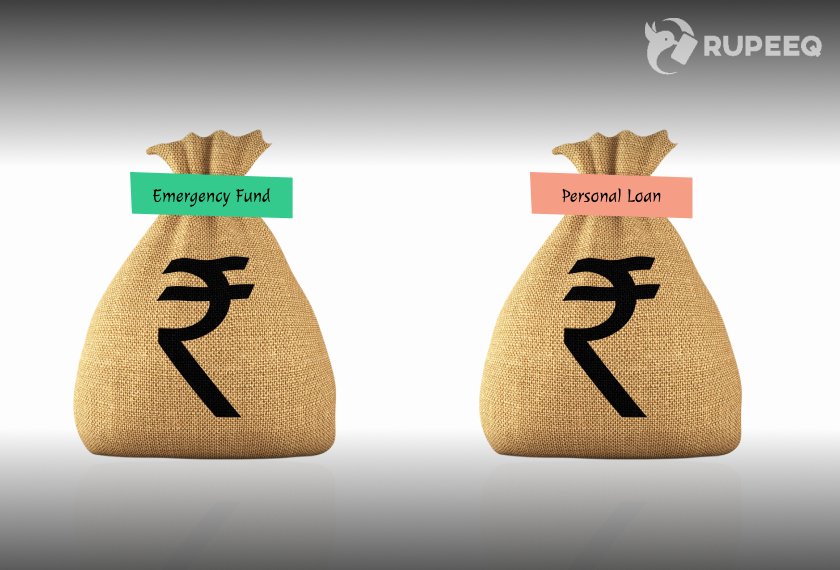
The emergency fund vs personal loan debate isn’t about which one is “better.” It’s about knowing which one fits your situation, because using the wrong one at the wrong time can cost you more than the emergency itself.
What Is an Emergency Fund (And Why Most People Don’t Have One)?
An emergency fund is money you’ve set aside specifically for unplanned expenses. It sits in a liquid account, like a savings account, and you don’t touch it for anything other than a genuine crisis.
The standard advice is to keep three to six months of expenses saved. But according to a 2023 report by the RBI and reported by Money Control, nearly 58% of Indian households have no formal savings buffer at all.
That’s a significant gap. And it’s exactly why personal loans have become the go-to solution for financial emergencies across the country.
Emergency Fund vs Personal Loan: The Core Difference
Before you decide which to use, you need to understand what each one actually costs you.
Emergency Fund:
- No interest, no fees
- Available immediately
- Reduces your financial cushion for future problems
- Takes time and discipline to rebuild
Personal Loan:
- Carries interest, typically between 10% to 24% per annum depending on your profile
- Approval can take anywhere from a few hours to a few days
- Adds an EMI to your monthly obligations
- Does not deplete your savings
The hidden cost of a personal loan isn’t just the interest. It’s also how the EMI pressure affects your monthly budget for the next one to five years.
RupeeQ Tip: Before you take a personal loan for any emergency, use the free EMI Calculator on RupeeQ to see exactly what your monthly repayment will look like at different loan amounts and tenures.
When Your Emergency Fund Should Be the First Call
There are situations where dipping into your emergency fund makes clear financial sense.
-
The Expense Is Small and One-Time
If the cost is under one month of your salary and won’t repeat, using your savings is almost always cheaper. You avoid interest charges and don’t add a new EMI.
-
You Can Rebuild the Fund Within Three to Four Months
Using your emergency fund only makes sense if you can realistically refill it within a short window. If you’d drain it and then struggle to save again for years, you’re leaving yourself exposed.
-
You Have No Existing Debt
If you’re already EMI-free, your monthly cash flow is stronger. That means you can rebuild savings faster after using them.
When a Personal Loan Makes More Sense
Sometimes the benefits of taking a short-term personal loan for emergencies are even better, even if you have savings.
-
The Emergency Is Large
If your medical bill or urgent home repair runs into several lakhs, wiping out your entire emergency fund leaves you with nothing for the next crisis. A personal loan for medical emergencies can cover the cost while your savings stay intact.
-
Your Fund Won’t Cover It Fully
Partial coverage is a problem. If you need Rs. 3 lakh but only have Rs. 80,000 saved, you’ll need to borrow anyway. In that case, borrowing the full amount and keeping your fund intact often makes more sense than splitting the cost.
-
Your Credit Score Is Strong
A CIBIL score above 750 gets you faster approvals and lower interest rates. If your profile is strong, the cost of borrowing is low enough that preserving your savings is worth it.
RupeeQ Tip: Check your credit score for free on RupeeQ ACE. If there are errors pulling your score down or habits you haven’t noticed, the platform flags them so you know exactly what to work on before a crisis forces you to borrow at a higher rate.
-
You Have a Predictable Income to Repay
Loan repayment only works if your monthly income supports the EMI comfortably. A good thumb rule: your total EMI obligations should not exceed 40 to 50% of your net monthly income.
The Real Problem: Having Neither
This is where most people actually find themselves. No emergency fund built up, poor credit score, and a loan application that gets rejected because of existing debt or low income.
If that’s your situation, there are two steps worth taking right now, before the next emergency hits.
- Step 1: Start an emergency fund with whatever you can, even Rs. 1,000 a month. Three years of consistent saving can build a meaningful buffer. The point isn’t the amount. It’s the habit.
- Step 2: Work on your credit profile. A decent credit score means better loan offers when you actually need one. Paying bills on time, keeping credit card utilisation under 30%, and avoiding multiple loan applications in a short window all contribute.
Emergency Fund vs Personal Loan: A Quick Decision Guide
| Situation | Better Option |
| Expense is small, income is stable | Emergency Fund |
| Expense is large, savings insufficient | Personal Loan |
| You can rebuild savings within 3-4 months | Emergency Fund |
| Your credit score is high, rate is low | Personal Loan |
| No savings at all | Personal Loan (and start saving after) |
| Already carrying heavy EMIs | Emergency Fund first |
A Note on Using Both
In some cases, splitting the cost is the practical answer. Cover part of the expense from your emergency fund and finance the rest through a short-term personal loan. This keeps your EMI manageable and preserves some of your savings buffer at the same time.
This approach works especially well for expenses in the Rs. 1.5 to Rs. 3 lakh range where one option alone creates unnecessary strain.
If you’re exploring this route, also understand how loan tenure affects your EMI payments before deciding how long to stretch the repayment period. A shorter tenure means higher EMIs but significantly lower total interest paid.
Avoiding the Mistakes That Make Either Option Worse
Whether you choose your fund or a loan, a few mistakes turn a manageable crisis into a longer financial problem.
- Using your emergency fund for non-emergencies. Vacations, gadgets, and home upgrades are not emergencies. Once that habit starts, the fund disappears fast.
- Borrowing more than you need. It’s tempting to take a slightly larger loan “just in case.” But every extra rupee borrowed has interest attached to it.
- Applying to multiple lenders at once. Each application creates a hard inquiry on your credit report. Too many in a short window lowers your score. Use a platform like RupeeQ.com to compare offers without triggering multiple inquiries.
- Ignoring the rebuilding phase. After a crisis, whether you used your savings or took a loan, not adjusting your budget to recover means you’ll be in the same spot at the next emergency.
The Bottom Line
The emergency fund vs personal loan decision is not a one-size-fits-all answer. It depends on the size of the expense, the state of your savings, your credit profile, and your ability to repay.
If you have a healthy fund and the expense is manageable, use it. If the cost is large and your savings won’t cover it without leaving you exposed, a personal loan is a practical and legitimate tool.
What matters most is making the decision with clarity, not panic. Know your credit score, understand what the loan will cost you monthly, and pick the option that keeps your broader financial position stable.
FAQs
-
Is it better to use an emergency fund or take a personal loan?
If you have enough savings to cover the expense without affecting your financial security, using your emergency fund is usually the more cost-effective option because it involves no interest. A personal loan may be a better choice for larger expenses that would otherwise exhaust your savings.
-
What expenses should an emergency fund be used for?
An emergency fund should be reserved for unexpected and essential expenses such as medical emergencies, urgent home or vehicle repairs, job loss, or other unforeseen financial situations. It should not be used for discretionary spending like vacations or shopping.
-
Can I take a personal loan even if I have an emergency fund?
Yes. In some cases, taking a personal loan while preserving your emergency savings can be a smart financial decision, especially if the expense is substantial and you qualify for a competitive interest rate. This ensures you still have a financial cushion for future emergencies.
-
How much should I keep in my emergency fund?
Financial experts generally recommend saving three to six months’ worth of essential living expenses. If that’s not immediately achievable, start with a smaller goal and build your emergency fund gradually through regular monthly contributions.
-
Does taking a personal loan affect my credit score?
A personal loan can impact your credit score in different ways. Applying for a loan may result in a hard inquiry, which can cause a small temporary dip. However, making EMI payments on time can improve your credit history and strengthen your credit score over time.
Disclaimer: Interest rates, loan eligibility, and repayment terms vary by lender, applicant profile, and RBI guidelines. Always check the latest terms before applying.