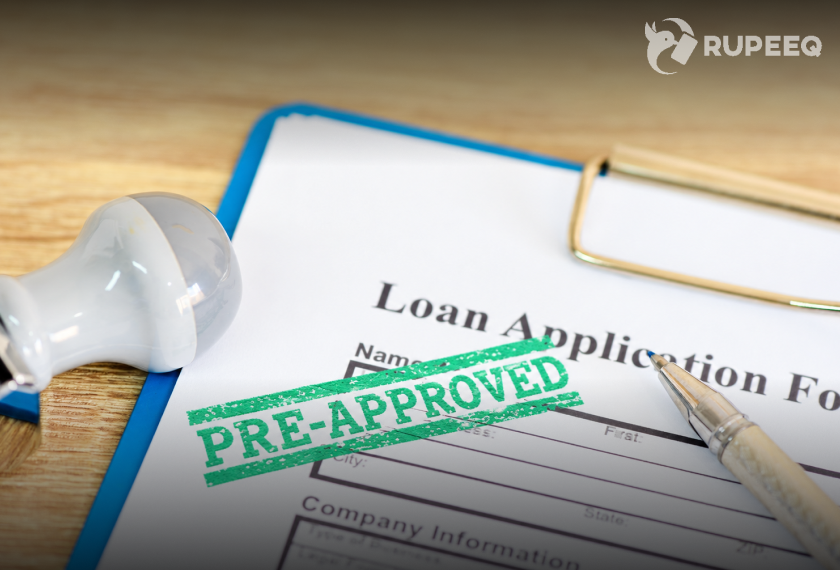
Approval is not the same as money in your account. The two sit at opposite ends of a process that still has three or four checkpoints in between.
That gap is where most borrowers get stuck. You get the congratulatory SMS, the sanction letter lands in your inbox, and then nothing moves for days.
Personal Loan approved but not disbursed is one of the most common complaints borrowers raise, and almost every cause behind it is fixable.
Approval and Disbursal Are Two Different Stages
An approval is the lender saying yes to your profile. A disbursal is the lender releasing the money after every operational box is ticked.
- Approval is based on your credit score, declared income, and FOIR
- Disbursal happens only after documents, agreement, and repayment mandate clear
- Between the two, lenders run a final personal loan verification process on everything you submitted
- A sanction can still be revised or withdrawn if something changes in that window
So an approval is conditional until the money actually lands. Knowing that changes how you follow up.
RupeeQ Tip: Do not chase your disbursal over phone calls alone. Email the lender and ask for the exact pending item, in writing, with your application reference number. A written trail gets you a specific answer instead of “it is under process,” and it becomes your evidence if you need to escalate later.
What a Normal Disbursal Clock Looks Like
Most borrowers panic too early or wait too long. This is roughly how the timeline runs once your loan is approved.
| Stage | What happens | Typical time | Where it gets stuck |
| Sanction | Lender issues the sanction letter with amount, rate, and tenure | Same day to 48 hours | Offer not accepted within the validity window |
| Agreement | Key Fact Statement shared, loan agreement signed or e-signed | A few hours to 1 day | e-sign OTP failure or KYC name mismatch |
| Final checks | Employment, income, and address re-verified | 1 to 3 working days | Employer or HR not reachable |
| Mandate setup | NACH or e-mandate registered for EMI auto-debit | 1 to 2 working days | Bank not supported, signature mismatch |
| Credit | Amount transferred by NEFT, RTGS, or IMPS | Same day to 48 hours | Bank holidays and daily cut-off timings |
Add it up and a normal digital loan takes two to five working days after approval. Anything past seven working days with no explanation deserves a formal follow-up.
RupeeQ Tip: Check your credit score for free on RupeeQ ACE before you accept a sanction offer. Lenders re-pull your bureau report right before disbursal, and a fresh EMI bounce or new loan on that report can stall the release. Knowing your current score tells you whether your file is likely to clear that last check.
Why a Personal Loan Approved but Not Disbursed Stays Pending?
Lenders have tightened the final step. The RBI’s Financial Stability Report of June 2026 placed delinquency on personal loans below ₹50,000 from fintech lenders at 6.4%, higher than NBFCs at 5.7% and banks at 4.1%.
Stress at that level is exactly why last-mile verification has become stricter across the industry. Here are the reasons that actually hold up a disbursal, and what clears each one.
-
Your Documents Did Not Match the Application
This is the single biggest cause of a stalled file. The name on your PAN reads differently from your bank account, your address proof has expired, or your salary slip format does not match what the credit team expected.
The system accepts the upload, but a human reviewer flags the mismatch later. Nothing moves until you send a corrected copy.
Key signs: A “clarification required” email, a request to re-upload, or a call asking you to confirm the spelling of your name.
Best fixed by: Resubmitting the corrected file the same day. Keeping the documents required for personal loans ready in one folder, in the exact spelling your bank uses, prevents this entirely.
-
Employment or Income Verification Is Still Running
Lenders call your HR, verify your employee ID, or check that your salary credit matches your slips. Smaller companies and HR teams that do not respond to unknown numbers stall this for days. It is the most common silent delay, because the lender rarely tells you this is the holdup.
Key signs: Disbursal stuck past three working days with no document request raised against you.
Best fixed by: Telling your HR to expect the call, and sharing an official work email ID with the lender. An employment letter on company letterhead often closes this faster than a phone verification.
-
The EMI Mandate Failed to Register
Before releasing money, the lender registers a NACH or e-mandate on your account for auto-debit.
It fails when the signature on record does not match, the account is a joint or NRE account, or your bank does not support e-mandates for that lender. The loan sits approved while this one step retries in the background.
Key signs: You signed the agreement, but there is no disbursal confirmation and no document pending.
Best fixed by: Switching the mandate to a different savings account, or asking for physical NACH if the e-mandate keeps bouncing. Use a salary account with a major bank wherever you have the choice.
-
The Loan Agreement or Key Fact Statement Is Unsigned
Under current digital lending norms, lenders must share a Key Fact Statement with the full cost of the loan before disbursal. Many borrowers open the link, skim it, and never complete the e-sign.
The lender cannot release funds without that acceptance. Some offers also sit inside a cooling-off window before the money moves.
Key signs: A pending e-sign link, an expired OTP, or an Aadhaar e-sign that failed on mobile.
Best fixed by: Completing the e-sign on a desktop browser if the app keeps failing, and confirming acceptance over email once it goes through.
-
Your Credit Profile Changed After Approval
Lenders re-check your bureau report right before releasing funds. A new credit card, a missed EMI, or fresh enquiries in that window can shrink your eligibility or cancel the sanction.
This also happens to borrowers who keep applying elsewhere while waiting. Each application adds an enquiry, and multiple loan applications in a short window make your file look desperate to the credit team.
Key signs: A revised sanction with a lower amount, a higher rate, or a sudden request for a co-applicant.
Best fixed by: Freezing all new credit activity until the money is credited. Clear any bounce immediately and share the payment proof with your lender.
-
The Delay Sits With the Lender, Not You
Not every holdup is your fault. Daily disbursal cut-offs, bank holidays, weekend NEFT batches, and internal month-end limits all push payouts to the next working day. Some lenders also batch small-ticket disbursals once or twice a day.
Key signs: Everything shows as complete in the app, with a disbursal date that keeps shifting by a day.
Best fixed by: Waiting out one full working day, then asking for the UTR number. Once a UTR exists, the money has left the lender and your bank is the one to follow up with.
What to Do When Nothing Moves?
If your sanction is seven working days old with no credit and no clear reason, start escalating in order.
- Ask for the pending item in writing, with a complaint reference number
- Escalate to the lender’s grievance or nodal officer, listed on their website
- If there is no reply within 30 days, file at the RBI Ombudsman portal, cms.rbi.org.in
- Avoid applying to a second lender until the first sanction is formally closed
Most files clear at the first step. Lenders respond faster to a written complaint than to a follow-up call.
Track Everything in the RupeeQ App
Applying through one platform instead of four apps keeps your enquiry count low and your paperwork consistent. That alone removes two of the six causes above.
On the RupeeQ app, you can:
- Compare personal loan offers from leading NBFCs and banks before you accept a sanction
- Check your credit score for free with RupeeQ ACE
- Run the EMI Calculator to confirm the EMI fits your FOIR before you sign
Starting with the right lender does more to speed up your loan approval than any follow-up call ever will.
Final Thought
A Personal Loan approved but not disbursed is almost never a rejection in disguise. It is usually one unsigned document, one failed mandate, or one verification call nobody picked up.
Find the exact pending item, fix it the same day, and keep your credit behavior quiet until the money lands. Borrowers who understand personal loan eligibility in India before applying rarely end up stuck at this stage at all.
FAQs
-
How long is a Personal Loan sanction letter valid?
Most sanction letters stay valid for 30 to 90 days, depending on the lender. If you do not complete signing and verification within that window, the lender reassesses your profile from scratch.
-
Will I be charged interest if the loan is approved but not disbursed?
No. Interest starts only from the disbursal date printed on your loan account statement. If any interest appears for the pending period, raise it with the lender immediately.
-
Is the processing fee refunded if disbursal never happens?
It depends on the stage. Fees deducted upfront are usually refundable if the lender cancels the sanction, but not if you withdraw after signing. Check the refund clause in your agreement.
-
Does a delayed disbursal hurt my credit score?
No. The delay itself is not reported to bureaus. Only the enquiry from your application appears, and that stays on your report whether the loan is disbursed or not.
Disclaimer: Interest rates, processing fees, repayment terms, and loan eligibility criteria may vary depending on the lender, applicant profile, RBI guidelines, and market conditions. The information shared in this article is for general informational purposes only and may change over time. Always verify the latest terms and charges before applying.