Your bank approved an overdraft facility, but the limit feels like it was set for someone who earns half of what you do. You draw it down in the first week, and then you’re back to square one until your salary hits.
That’s not a spending problem. That’s a limit problem.
Banks don’t increase your overdraft limit automatically. You have to give them a reason to. And if you go in without knowing what they actually look at, you’ll either get a flat rejection or a token bump that barely moves the needle.
Here’s what actually works.
What Banks Look at Before Increasing Your Overdraft Limit
Before you request an increase, it helps to understand what drives the decision.
Banks assess overdraft limits based on a few core factors:
- Net monthly income: Most banks cap the OD limit at a multiple of your salary. If your income has gone up since you first applied, that’s your strongest lever.
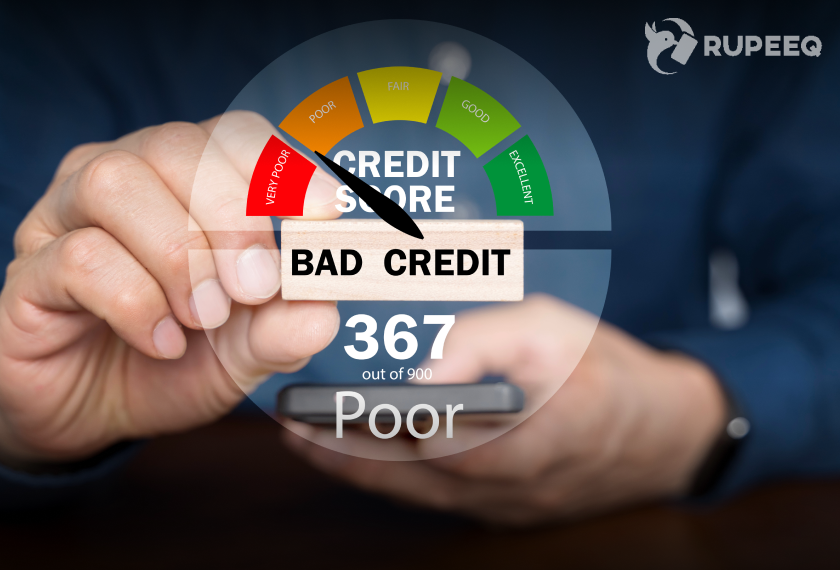
- Credit score: A score above 700 signals low default risk. Below that, most lenders won’t budge on limits.
- Repayment behavior: How often you clear your drawn OD balance matters more than how much you use it.
- Existing debt obligations: Your Debt-to-income ratio tells the bank how stretched you already are.
- Relationship with the bank: Account vintage, salary crediting history, and other products held with the same bank all factor in.
RupeeQ Tip: Before making a formal request, check your free credit score on RupeeQ ACE. If your score has dipped below 700, work on it first. A request made with a weak score often results in a review that flags you for closer scrutiny.
6 Ways to Increase Overdraft Limit That Actually Move the Needle
-
Time Your Request After a Salary Hike
This is the most direct route. If your net monthly salary has increased since your overdraft was first approved, you have a concrete case.
Banks typically offer OD limits at 1x to 3x of net monthly salary for salaried borrowers. Some public sector banks go up to 5x for government employees. If you’ve moved up a pay grade or received a revision under a pay commission, that directly translates to a higher eligible limit.
What to do:
- Get your latest salary slips (last 3 months)
- If you’re a government employee, get an updated service certificate showing your current pay scale
- Submit a written request to your branch with the revised salary documents
Don’t wait for the bank to initiate this. They won’t.
-
Clear Your Outstanding OD Balance First
Banks look at repayment behavior before approving a limit increase. If you’ve been carrying a drawn balance for several months without clearing it, you’re essentially asking for more credit while signaling you can’t manage what you already have.
Clear the outstanding balance or bring it to a low utilization level before applying. Ideally, you want your OD utilization under 30% at the time of the request, similar to how credit card utilization affects your credit profile.
This isn’t just about optics. It directly affects the bank’s internal credit assessment.
-
Improve Your Credit Score Before Applying
A credit score improvement between applications is one of the clearest signals a bank can receive that your risk profile has changed.
Steps that make a measurable difference:
- Pay all EMIs and bills on or before the due date, without exceptions
- Keep credit card utilization below 30% across all cards
- Avoid multiple loan applications in a short period, since each creates a hard inquiry
- Check your credit report for errors and raise disputes if any accounts are incorrectly reported
According to data from CRIF High Mark, borrowers with scores above 750 are significantly more likely to receive credit limit enhancements compared to those in the 650–700 range. The difference isn’t marginal, it’s the threshold most lenders use for discretionary increases.
-
Reduce Your FOIR Before Making the Request
Your Fixed Obligation to Income Ratio is the percentage of your monthly income already committed to EMI payments. Most banks want this under 50% before extending additional credit.
If you’re carrying multiple active loans or credit card EMIs, your FOIR might be blocking the increase even if your income has grown.
Practical steps:
- List all current EMIs and identify any you can prepay or close
- Clear smaller loans first to reduce the EMI count
- Avoid taking on new EMI commitments in the 60–90 days before requesting an OD limit increase
Even closing one small EMI can shift your FOIR enough to cross the bank’s threshold. Understanding how loan tenure impacts EMI can help you decide which loans to prioritize for prepayment.
RupeeQ Tip: Use the free EMI Calculator on RupeeQ to calculate your current FOIR and see how your profile changes after closing a specific EMI. It takes two minutes and gives you a cleaner picture before walking into the bank.
-
Shift Your Salary Account to the Lending Bank
If your overdraft is with a bank where your salary isn’t credited, you’re working with a disadvantage. Banks extend better limits and faster approvals to salary account holders because they can directly verify your income and observe your cash flow patterns.
Shifting your salary account to the same bank creates a stronger case:
- The bank can see your monthly income directly without relying on slips
- It demonstrates financial commitment to that institution
- Many banks have dedicated schemes for salary account holders with pre-approved limit increases
This isn’t always practical, but if you’re already banking with an institution that offers competitive rates, the consolidation makes sense financially too.
-
Submit a Formal Written Request With Supporting Documents
Walking into a branch and verbally asking for a higher limit rarely works. A formal written request with documentation moves faster through the review process and leaves a paper trail.
Your request letter should include:
- Current OD limit and the increase you’re requesting
- Reason for the increase (salary hike, increased expenses, business needs)
- Latest salary slips and bank statements (last 6 months)
- Updated service certificate or employment letter
- Reference to your repayment history with the bank
Keep it factual. Banks respond to data, not explanations.
Should You Switch Lenders Instead?
If your current bank has been slow to increase your limit despite a clean repayment history and improving income, it may be worth comparing offers elsewhere.
Some NBFCs and private banks offer overdraft facilities with higher income multiples and faster limit revisions for salaried borrowers. The difference in what you’re eligible for can be significant depending on the lender.
A useful way to think about it: your overdraft limit reflects how your lender values your profile. If that valuation feels outdated, a comparison across lenders often reveals better options. For this, visit RupeeQ.com, fill your details and explore all the NBFCs and banks, ready to offer you Overdraft Facility.
You can also explore how a credit line works as an emergency fund to decide whether an overdraft is even the right product for your needs.
Common Mistakes That Get OD Increase Requests Rejected
- Applying right after drawing down the full limit
- Submitting outdated salary slips from six months ago
- Not addressing existing credit report errors before applying
- Requesting an unrealistically large increase in one shot (go in increments)
- Applying to multiple banks simultaneously, which triggers multiple hard inquiries
Quick Summary
| What to Do | Why It Works |
| Request after salary increase | Income revision directly justifies higher limit |
| Clear outstanding OD balance | Shows repayment discipline |
| Improve credit score above 750 | Clears the threshold for discretionary increases |
| Reduce FOIR below 50% | Removes the debt-to-income barrier |
| Shift salary account to lender | Strengthens relationship and income visibility |
| Submit formal request with documents | Speeds up internal review process |
Final Word
A limit increase isn’t something banks volunteer. You have to make the case, and the case has to be grounded in data they can verify, your income, your repayment behavior, your credit profile, and your debt obligations.
Work on two or three of the factors above before you submit the request. The combination matters more than any single step.
FAQs
-
How often can I request an overdraft limit increase?
Most banks allow one request per 6–12 months. Frequent requests without a change in financial profile are usually declined and can raise a flag.
-
Will requesting an OD limit increase affect my credit score?
A formal request triggers a hard inquiry, which can cause a small, temporary dip. This is why timing your request to coincide with other positive changes (income increase, lower FOIR) makes sense.
-
What is the maximum overdraft limit a bank will offer?
For salaried borrowers, most public sector banks offer up to 3x net monthly salary. Some go up to 6x for senior government officers. Private banks and NBFCs vary, the limit depends on your credit profile and account history.
-
Can a pensioner get a higher overdraft limit?
Yes, though the process is similar. Pensioners need to show an increase in pension income, a clean repayment record, and low existing debt. Most banks cap pensioner OD limits at 2x monthly pension.
-
Does keeping money in my account help increase the OD limit?
Maintaining a healthy average balance signals financial stability and can positively influence a bank’s internal credit review, though it’s not an official criterion at most institutions.