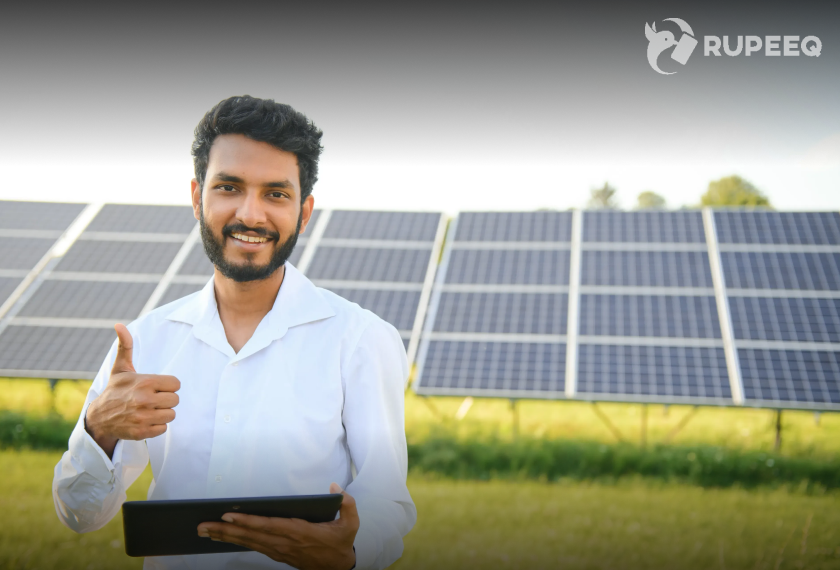
Your electricity bill just crossed ₹6,000 again, and you’ve started wondering if solar panels are worth it. They are, but the upfront cost, often ₹1.5 lakh to ₹3 lakh for a home system, stops most people before they even get a quote.
An instant Personal Loan for Solar Panel Installation closes that gap, and it’s easier to get than most homeowners assume.
This blog walks you through exactly how to get one, step by step.
Why More Homeowners Are Financing Solar Instead of Paying Upfront
Solar adoption in India isn’t a niche trend anymore. Under the PM Surya Ghar Muft Bijli Yojana, rooftop solar installations jumped from about 7,000 a month before the scheme to over three lakh a month today, according to the PIB.
That kind of scale means financing options have matured alongside demand. A Personal Loan for Solar Panel Installation works well because:
- It’s unsecured, so you don’t pledge your house or any asset
- Disbursal is quick, often within 24 to 72 hours
- You can borrow the exact installation cost instead of dipping into savings
- Subsidy amounts under government schemes can be adjusted against the loan later
Here are the steps to avail a personal loan:
Step 1: Calculate the Exact Cost Before You Apply
Solar installers quote based on system size, usually 3kW, 5kW, or 10kW, and your city’s labor and equipment costs. Get at least two quotes before applying for a loan so you’re not over-borrowing or falling short mid-installation.
Factor in:
- Panel and inverter cost
- Installation and wiring charges
- Net metering application fees
- Annual maintenance, if bundled into the quote
RupeeQ Tip: Once you have your quote, run it through RupeeQ’s free EMI Calculator to see how different tenures affect your monthly outgo. It helps you decide whether a 2-year or 4-year term fits your budget better.
Step 2: Check How Much You’re Eligible to Borrow
Most lenders calculate your Personal Loan for Solar Panel Installation eligibility using your net monthly salary and existing obligations.
- Salaried applicants: typically 10 to 24 times monthly salary
- Self-employed applicants: based on ITR and business turnover
- FOIR (Fixed Obligation to Income Ratio) usually needs to stay under 50%
If your existing EMIs already eat into a large chunk of your income, your eligible loan amount for solar installation drops accordingly. Reading up on personal loan eligibility in India before you apply gives you a clearer picture of where you stand.
Step 3: Strengthen Your Credit Score First
Lenders treat a solar installation loan the same way they treat any other unsecured Personal Loan, meaning your credit score decides both approval and interest rate.
- A score above 750 usually gets you the lowest rates on offer
- Scores between 650 and 750 still qualify, but at higher interest
- Below 650, approval gets harder and some NBFCs may ask for a co-applicant
Before applying, pay down credit card balances and clear any overdue EMIs. Small improvements to your credit score add up quickly if you’re following steps to improve your credit score consistently over a few months.
Step 4: Compare Lenders Specifically Offering Solar Financing
Not every bank markets a dedicated solar loan, but almost all Personal Loan products can be used for panel installation since there’s no restriction on end-use for unsecured loans.
- Some NBFCs now bundle solar financing with tie-ups to installers, offering slightly lower rates
- Public sector banks may extend green loan schemes with marginally reduced interest
- Digital lenders process solar loan applications faster, often same-day approval
Comparing three or four lenders instead of applying blindly protects your credit score, since every rejected application shows up as a hard inquiry.
RupeeQ tip: Check your credit score for free on RupeeQ ACE. It is better to have a clear idea about your credit score before applying anywhere.
Step 5: Keep Your Documents Ready
A Personal Loan for Solar Panel Installation needs standard income and identity proof, plus the solar installer’s quotation.
- PAN card and a government-issued photo ID
- Address proof not older than 3 months
- Last 3 months’ salary slips or ITR for self-employed applicants
- Last 6 months’ bank statements
- Signed quotation from the solar installation vendor
Keeping the installer’s quote ready speeds up processing, since some lenders disburse the loan directly to the vendor. For a full breakdown, it helps to check the documents required for personal loans before submitting your application.
Step 6: Apply and Track Disbursal
Once your lender approves the loan, disbursal timelines vary:
- NBFCs: usually 24 to 48 hours after document verification
- Banks: 3 to 7 working days depending on internal checks
- Digital lenders: same-day disbursal for pre-approved profiles
Confirm with your installer whether they need the full amount upfront or in installments tied to project milestones, since this affects how you structure the loan disbursal request.
Should You Wait for the Subsidy Instead of Taking a Loan?
Under the PM Surya Ghar scheme, eligible households get a subsidy after installation, not before. That means you still need to fund the installation cost yourself, and the subsidy arrives as a reimbursement later.
Taking a Personal Loan for Solar Panel Installation now, then using the subsidy to prepay part of the loan once it’s credited, is a common and practical approach.
It avoids delaying your installation while you wait for government processing timelines that can stretch over several weeks.
Common Mistakes to Avoid
- Borrowing more than the actual installer quote, which increases unnecessary interest
- Skipping quote comparisons and going with the first vendor
- Applying to multiple lenders in the same week
- Ignoring the subsidy adjustment window when planning your EMI
Final Thought
A Personal Loan for Solar Panel Installation isn’t just about covering cost, it’s about timing your investment so you start saving on electricity bills sooner rather than later.
Get your quotes right, check your eligibility, and pick a lender that fits your income profile instead of applying everywhere at once.
Compare matched Personal Loan offers on RupeeQ.com and move forward with your solar installation without guesswork.
FAQs
-
Can I get a Personal Loan for Solar Panel Installation without a co-applicant?
Yes, if your income and credit score meet the lender’s individual eligibility criteria. A co-applicant only becomes necessary if your profile falls short on its own.
-
Does taking a solar loan affect my eligibility for the government subsidy?
No. The subsidy under PM Surya Ghar is tied to your installation and net metering approval, not to how you fund the upfront cost.
-
What loan tenure works best for solar installation?
Most borrowers choose 2 to 4 years, since electricity bill savings often offset the EMI within that window.
-
Can self-employed individuals apply for a solar installation loan?
Yes, based on ITR filings and business turnover, though documentation requirements are slightly more detailed than for salaried applicants.
Disclaimer: Interest rates, eligibility criteria, and loan terms vary by lender and are subject to change based on RBI guidelines and market conditions. This article is for general informational purposes only. Always verify current terms with your lender before applying.