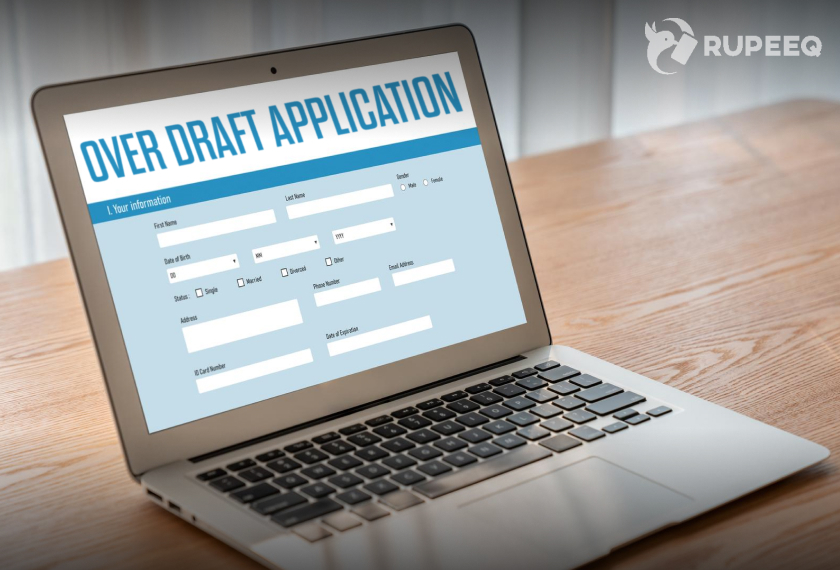
Most people reach for a Personal Loan the moment they need quick cash. But there’s a smarter option that most borrowers overlook: an Overdraft loan.
You borrow only what you use, pay interest only on that amount, and keep the credit line open for the next time you need it.
If you have been wondering how to apply for an Overdraft loan online without walking into a branch or chasing a relationship manager, this guide covers the full process through RupeeQ.
Understanding Overdraft Loan and Why Does It Work Differently
An Overdraft (OD) Loan gives you access to a pre-approved credit limit. You can withdraw any amount up to that limit, repay it, and borrow again. Think of it like a revolving credit facility tied to your account.
What makes it different from a regular Personal Loan:
- You’re charged interest only on what you withdraw, not the full sanctioned limit
- No fixed EMI structure in most cases; repayment is flexible
- The credit line stays active even after partial repayments
- Particularly useful for irregular income earners, business owners, and salaried professionals managing cash flow gaps
Before You Apply: What Lenders Check
Jumping straight into the application without checking your profile is the most common reason for rejections. Lenders evaluate a few things specifically for Overdraft facilities:
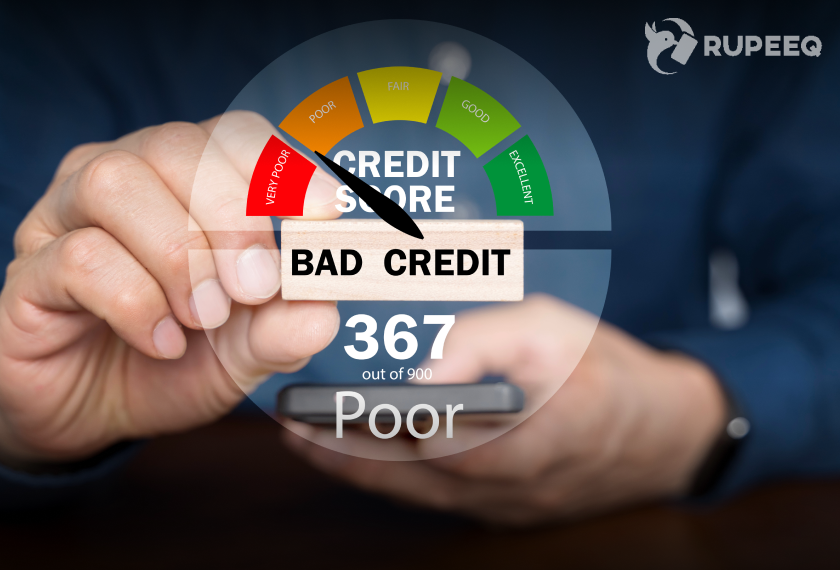
- Credit score: Most lenders require a score of 700 or above. A higher score often unlocks a larger OD limit.
- Income stability: Salaried applicants need to show consistent monthly credits in their bank account. Self-employed individuals are assessed on ITR and account turnover.
- Existing obligations: Your FOIR or Debt to Income Ratio is checked. High existing EMIs reduce your eligible OD limit.
- Account relationship: Some lenders offer better OD terms to existing account holders or salary account customers.
RupeeQ Tip: Before applying, check your free credit score on RupeeQ ACE. It shows not just your score but also the factors pulling it down, so you know exactly where you stand before a lender pulls your report.
Step-by-Step: How to Apply for an Overdraft Loan Online via RupeeQ
Step 1: Visit RupeeQ and Set Up Your Profile
Go to RupeeQ.com and create your account. You’ll be asked to enter:
- Basic personal details (name, PAN, date of birth)
- Employment type (salaried or self-employed)
- Monthly income or annual turnover
- City of residence
This profile helps RupeeQ match you with lenders whose eligibility criteria you actually meet.
Step 2: Check Your Credit Score and Loan Eligibility
Once your profile is set up, pull your free credit score on the platform. This is a soft inquiry and does not affect your credit report.
Based on your score and income inputs, RupeeQ shows:
- Your estimated Overdraft eligibility
- Matched lender options with their OD limit ranges and interest rates
- Whether you qualify for pre-approved offers
Knowing your eligibility before you apply keeps unnecessary hard inquiries off your credit file.
Step 3: Compare Overdraft Offers from Matched Lenders
RupeeQ surfaces multiple lender options side by side. When comparing Overdraft facilities, look beyond just the interest rate:
-
- Processing fee: One-time charge applied at sanction. Can range from 0.5% to 2% of the limit.
- Annual renewal fee: Some OD facilities charge a yearly fee to keep the line active.
- Minimum withdrawal amount: Some lenders enforce a floor on each withdrawal.
- Foreclosure terms: Check if you can close the facility early without penalties.
- Interest Rates: Most Banks and NBFCs charge 10% to 20% p.a. Interest rates.
Understanding how interest is calculated on an Overdraft loan before you select one saves you from surprises when the first statement arrives.
Step 4: Select a Lender and Fill Out the Application
After picking an offer, you’ll be redirected to the lender’s application page (or complete it within RupeeQ’s platform, depending on the lender).
You’ll need to fill in:
- KYC details (Aadhaar, PAN)
- Employment and income information
- Bank account details for disbursement and repayment
RupeeQ Tip: Use RupeeQ’s free EMI Calculator to estimate the interest outflow under different withdrawal scenarios before you commit to a limit. It helps you borrow only what makes sense for your repayment capacity.
Step 5: Upload Your Documents
Overdraft loans for personal use typically require:
For salaried applicants:
- Last 3 months’ salary slips
- Last 6 months’ bank statements (salary account)
- PAN and Aadhaar
For self-employed applicants:
- Last 2 years’ ITR with computation
- Last 6 months’ current account statements
- Business registration proof (GST certificate or trade license)
Digital lenders often complete KYC through Aadhaar-based eKYC, which removes the need for physical submissions entirely.
Make sure every document matches the name and address you’ve entered in the form. Even a minor mismatch between your Aadhaar address and your application form can delay the process by days.
Step 6: Complete Video KYC or In-Branch Verification
Most online lenders now use Video KYC to complete identity verification. You’ll need:
- A working front camera
- Your original Aadhaar and PAN cards (to show on camera)
- A quiet, well-lit space for the short call
The call typically takes five to ten minutes. Once cleared, your application moves to credit underwriting.
Step 7: Receive Sanction and Activate Your Overdraft Limit
After underwriting, you’ll receive a sanction letter stating:
- The approved OD limit
- Interest rate applicable
- Validity period of the facility (usually 12 months, renewable)
- Repayment terms
Once you accept the terms and complete eSign or physical agreement, the Overdraft limit is credited to your linked account or a dedicated OD account. You can begin withdrawing immediately.
What Affects the OD Limit You Get Approved For
Two applicants with the same income can receive very different Overdraft limits. The factors behind that gap:
- Credit score: Higher scores unlock higher limits
- Employer category: Listed company employees often get better terms than those at unlisted firms
- Banking relationship: Existing customers with long-standing salary accounts often get pre-approved limits
- Existing debt: High FOIR reduces the limit a lender is willing to offer
Managing your credit card utilization ratio and keeping it below 30% is one of the easier ways to improve your credit profile before applying for an OD facility.
Common Mistakes to Avoid When Applying Online
- Applying to multiple lenders simultaneously (each hard inquiry dents your score)
- Skipping the credit score check before applying
- Submitting bank statements that don’t clearly show regular salary credits
- Choosing the highest limit offered without checking the annual renewal fees
- Not reading the foreclosure clause before signing
Quick Summary
| Step | What You Do |
| 1. Set up profile | Enter income and employment details on RupeeQ |
| 2. Check eligibility | View soft-pull credit score and matched OD offers |
| 3. Compare offers | Look at limit, rate, fees, and renewal terms |
| 4. Fill application | Complete the form with personal and income details |
| 5. Upload documents | Submit KYC, income proof, and bank statements |
| 6. Complete KYC | Do Video KYC or in-branch verification |
| 7. Activate OD limit | Accept terms, eSign, and start using the facility |
Final Thought
The actual process to apply for an Overdraft loan online is straightforward once your documents are in order and your credit profile is in reasonable shape. What trips most applicants is either applying to the wrong lender or not preparing their profile before submitting.
RupeeQ removes the guesswork by showing you matched offers based on your actual profile before you apply. No multiple applications, no unnecessary hard inquiries, just a clear picture of where you stand and what’s available.
FAQs
-
Is an Overdraft loan better than a Personal Loan for short-term needs?
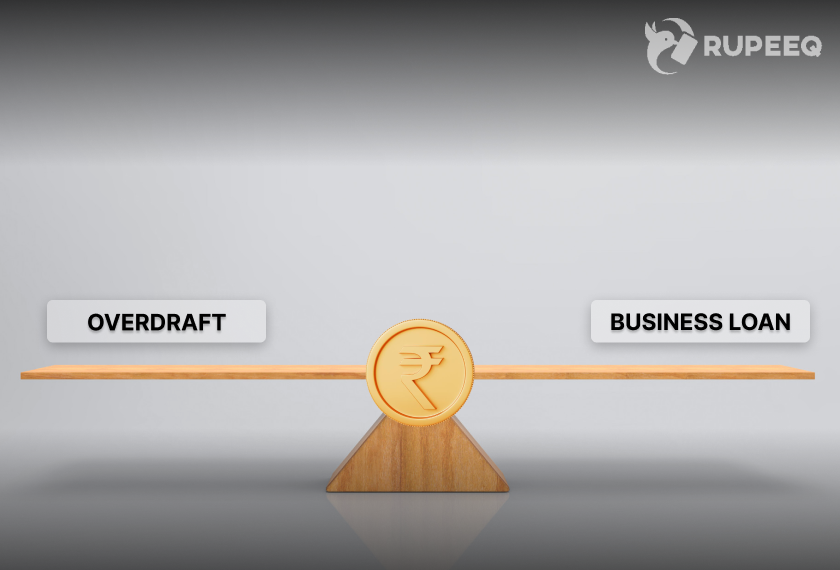
For needs where you’re unsure of the exact amount required, an OD is usually better. You pay interest only on what you withdraw, which makes it more cost-effective than a fixed Personal Loan if you repay quickly.
-
Can salaried individuals apply for an Overdraft loan online?
Yes. Most banks and NBFCs offer OD facilities to salaried individuals, particularly those with salary accounts at the same institution.
-
What credit score is needed to apply for an Overdraft loan online?
Most lenders look for a score of 700 or above. Some NBFCs may work with lower scores but typically at a reduced limit and higher interest rate.
-
How long does it take to get an Overdraft limit activated?
With digital lenders, the process from application to activation can take 24 to 72 hours. Traditional banks may take 5 to 7 working days.
-
Does an unused Overdraft limit affect my credit score?
A sanctioned but unused OD limit does not hurt your score. Frequent large withdrawals and delayed repayments can, however, negatively impact it over time.