Most people discover they need an Overdraft Loan after a payment bounces. And then starts the scramble: checking eligibility, calling the bank, wondering if their profile is strong enough to get approved quickly.
If you want to avoid that panic, here’s a clear breakdown of the Overdraft Loan eligibility criteria in India, what lenders actually look at, and how you can position yourself for a faster, cleaner approval.
Who Can Apply for an Overdraft Loan in India?
An overdraft (OD) facility lets you withdraw more than your account balance, up to a pre-approved limit. You pay interest only on the amount you actually use, not the full sanctioned limit.
It’s different from a Personal Loan in one important way: there’s no fixed EMI. You repay when you can, and the interest meter runs only while you’re using the funds.
Overdraft facilities are not one-size-fits-all. Different lender types serve different borrower profiles.
- Overdraft Facility for Salaried Employees individuals are often the easiest approvals. Many banks offer an overdraft limit of up to 2-3 times the monthly net salary directly linked to the account.
- Self-employed professionals: doctors, CAs, architects can access OD facilities against their business current accounts or professional income.
- Business owners and MSMEs can get overdraft against receivables, stock, or property.
- Existing account holders with a clean repayment history at a bank tend to get pre-approved OD offers more readily than new customers.
Overdraft Loan Eligibility Criteria in India: What Lenders Check
Knowing what lenders typically evaluate can improve your approval chances and help you choose the right type of overdraft facility.
1. Account Relationship and Vintage
Most banks prefer applicants who have maintained an account with them for at least 6 to 12 months. A longer, clean banking relationship signals financial stability.
- Minimum account vintage: 6 months (most banks)
- Regular salary credits or business turnover preferred
- Dormant or irregular accounts are typically rejected
2. Credit Score
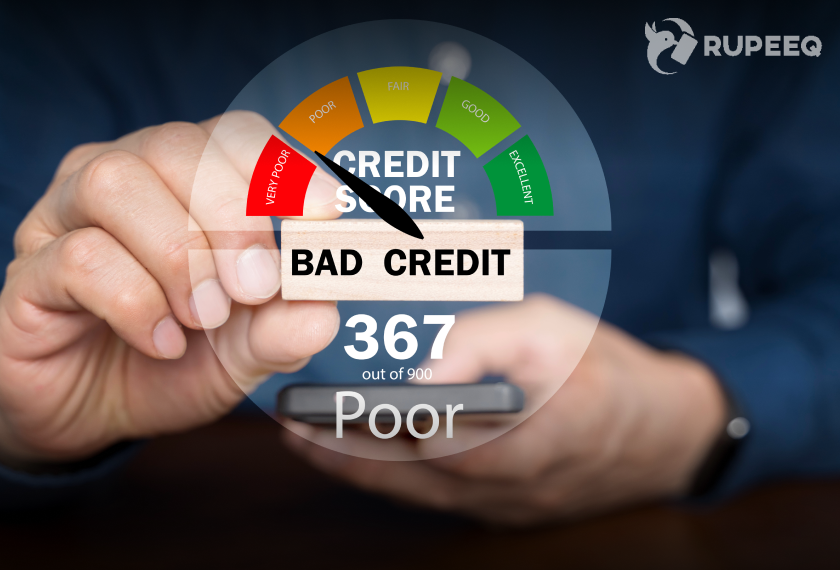
A Credit Score above 700 significantly improves your chances of approval and better OD terms. According to CRIF High Mark’s Report, borrowers with scores above 750 receive higher loan amounts at lower interest rates compared to those in the 650-700 range.
Lenders check your Credit Score to assess your repayment behavior across all existing credit obligations. Even one 30-day default can narrow your options considerably.
RupeeQ Tip: Before approaching a bank for an overdraft, check your free Credit Score on RupeeQ ACE. It gives you a clear view of what’s affecting your score so you can fix issues before they become rejection reasons.
3. Income and Repayment Capacity
For salaried applicants, lenders look at:
- Minimum monthly net salary (varies by bank, typically ₹15,000 to ₹25,000)
- Salary credits should be regular and from a known employer
- Existing EMI obligations should leave enough monthly surplus
For self-employed applicants:
- Minimum annual income as per ITR: usually ₹2.5 lakh to ₹5 lakh
- Business continuity of at least 2 years
- Consistent bank statement credits over the last 12 months
4. FOIR (Fixed Obligation to Income Ratio)
Lenders calculate your Debt-to-income ratio to check how much of your monthly income is already locked into loan repayments. Most prefer this under 50%.
If your existing EMIs already consume a large chunk of your take-home pay, the bank may reduce your OD limit or decline the application entirely.
RupeeQ Tip: Use RupeeQ’s free EMI Calculator to check your current FOIR. Knowing your exact debt load before you apply lets you decide whether to close an existing loan first or proceed as-is.
5. Type of Overdraft and Collateral
The eligibility bar changes based on what you’re offering as security:
- Secured overdraft (against FD, property, or shares): Easier to get, lower interest rates, flexible income requirements
- Unsecured overdraft (against salary or current account): Stricter credit and income requirements, but no collateral needed
If your income is on the lower end, a secured overdraft against a fixed deposit is often the more practical route.
Documents Required for Overdraft Loan Applications
Getting your paperwork in order before applying saves significant time. Here’s what most banks and NBFCs ask for:
For salaried applicants:
- Valid photo ID (Aadhaar + PAN mandatory)
- Last 3 months’ salary slips
- Last 6 months’ bank statements (salary account)
- Address proof not older than 3 months
For self-employed applicants:
- Last 2 years’ ITR with computation
- Last 12 months’ bank statements
- Business continuity proof (GST certificate, trade license)
- PAN card (mandatory)
For secured overdraft:
- All of the above, plus documents for the collateral being pledged (FD receipt, property papers, share certificates)
Common Reasons Overdraft Applications Get Rejected
Most rejections are avoidable. These are the patterns that show up most often:
- Low or irregular Credit Score: A score below 650 with recent late payments is a near-certain rejection for unsecured OD
- High existing debt load: FOIR above 55-60% leaves little room for a new credit facility
- Insufficient account vintage: Applying too soon after opening an account
- Income mismatch: Declared income doesn’t match bank statement credits
- Unstable employment: Frequent job changes in the last 12 months concern lenders
Understanding why Personal Loan applications get rejected can help you identify similar risk signals in your own profile before you apply for an overdraft.
Overdraft vs. Personal Loan: Which One Makes More Sense?
This question comes up often, and the answer depends on how you plan to use the funds.
| Factor | Overdraft Loan | Personal Loan |
| Interest charged on | Amount used | Full sanctioned amount |
| Repayment structure | Flexible, revolving | Fixed EMIs |
| Best for | Short-term, recurring needs | One-time lump-sum needs |
| Approval time | Fast if pre-approved | 1-3 business days typically |
| Credit Score impact | Lower if managed well | Fixed inquiry + repayment trail |
If you need funds for a single expense with a known repayment timeline, a Personal Loan is usually cleaner. If you need a buffer for irregular cash flows, overdraft wins. You can read more about how overdraft interest is calculated to decide which structure suits your situation better.
Steps to Improve Your Overdraft Loan Eligibility
If your profile isn’t quite there yet, these steps can move the needle:
- Pay down at least one existing EMI before applying. Even a small reduction in your FOIR makes a visible difference to lenders.
- Maintain a regular salary credit pattern for at least 6 months before requesting an OD upgrade.
- Keep Credit Card utilization below 30% of your total limit in the 3 months leading up to the application.
- Avoid multiple credit inquiries in a short window. Each hard inquiry dips your score slightly, which stacks up fast.
- Opt for a secured OD if income is irregular. A fixed deposit as collateral bypasses several income-related hurdles.
Building a strong credit profile from the ground up takes time, but even 60-90 days of clean behavior can shift a lender’s decision meaningfully.
Final Takeaway
Overdraft Loan eligibility in India isn’t a mystery, but it does reward preparation. The borrowers who get approved quickly are those who’ve maintained a clean repayment history, managed their debt load, and picked the right type of facility for their profile.
If you’re unsure where your profile stands, visit RupeeQ.com and start with your Credit Score and your FOIR. Those two numbers tell you almost everything a lender is going to see when they open your application.
FAQs
-
What is the minimum salary required for an Overdraft Loan in India?
Most banks set the bar at ₹15,000 to ₹25,000 net monthly salary for salaried applicants, though NBFCs may approve at lower income levels with a strong Credit Score.
-
Can I get an overdraft without a Credit Score?
It’s difficult for unsecured overdrafts. Your best option is a secured OD against an FD, which significantly reduces the lender’s reliance on Credit Score.
-
How long does Overdraft Loan approval take?
For existing account holders with pre-approved offers, it can be near-instant. Fresh applications typically take 2-5 business days depending on documentation and verification.
-
Does an overdraft affect my Credit Score?
Yes. Utilization beyond 30-40% of your OD limit can affect your Credit Score, similar to a Credit Card. Timely repayment and low utilization help keep the impact positive.
-
Can self-employed individuals apply for an Overdraft Loan?
Yes. Self-employed applicants need 2 years of business vintage, consistent bank credits, and ITR filings. Secured overdraft against property or FD is also accessible to this segment.
Disclaimer: Interest rates, processing fees, repayment terms, and loan eligibility criteria may vary depending on the lender, applicant profile, RBI guidelines, and market conditions. The information shared in this article is for general informational purposes only and may change over time. Always verify the latest terms and charges before applying.