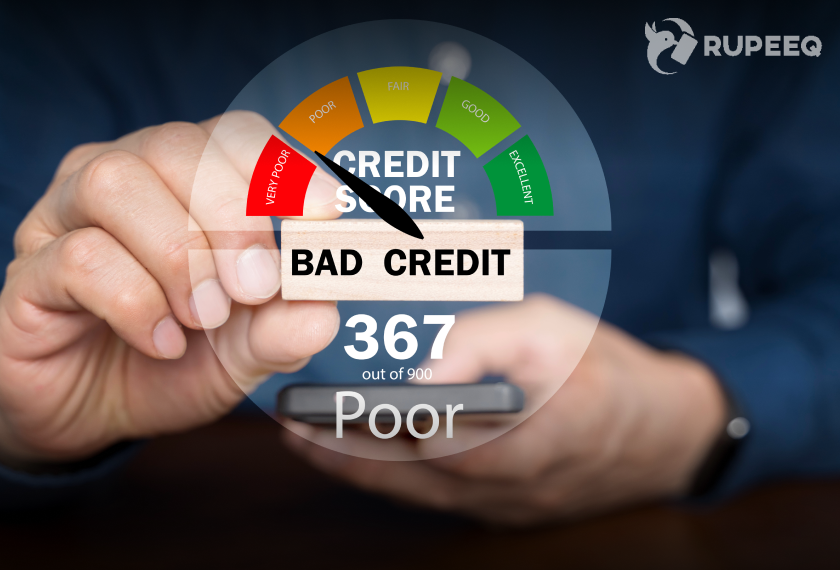
A Flexi Loan sounds like a smart deal on paper. You get a pre-approved credit limit, draw only what you need, repay it, and draw again. Interest accrues only on the outstanding amount. No need to apply every time you need funds.
But that same flexibility is what makes it easy to over-borrow without realising it. There is no fixed disbursement, no hard stop, and no natural repayment deadline. The credit keeps refreshing as you repay, and that constant availability is where the trouble starts.
Most people do not over-borrow because they are careless. They over-borrow because the structure of a Flexi Loan makes small withdrawals feel low-stakes until the interest compounds into something they did not expect.
Here is what the data shows: A 2024 TransUnion CIBIL report found that borrowers with multiple revolving credit lines are 2.3x more likely to show early signs of repayment stress within 12 months. The Reserve Bank of India also flagged in its 2023-24 annual report that unsecured personal credit, including flexi products, has grown faster than income levels in several borrower segments.
Why Flexi Loans Make Over-Borrowing Easy to Miss
Traditional loans disburse once. You borrow a fixed amount, repay in EMIs, and the loan closes. There is a beginning and an end. Flexi loans do not work that way.
Every repayment you make restores your available limit. That number sits in the app, always visible, always accessible. To the human brain, available credit starts to feel like available money. Behavioral economists call this mental accounting, and it is one of the main reasons borrowers end up using Flexi Loans as a substitute for a savings buffer instead of a short-term credit tool.
Understanding how to avoid over-borrowing with a Flexi Loan starts with recognising this pattern. Once you do, the steps below give you a practical structure to stay within it.
Steps to Avoid Over-Borrowing With a Flexi Loan
1. Set Your Own Limit Before You Borrow
Your lender approves a maximum credit limit based on your eligibility. That number is a ceiling, not a target. Before you use the account for the first time, decide on a personal cap, typically 40 to 50 percent of the sanctioned limit, and commit to treating anything above it as off-limits.
This removes the most common justification for over-borrowing: “I still have a limit left.” Once you define your own boundary, that justification disappears.
RupeeQ Tip: Write your personal limit down somewhere visible, not just in your head. A note on your phone or a sticky on your laptop sounds simple, but it creates a moment of friction before every withdrawal. That pause is often enough to stop an impulsive draw.
2. Borrow for a Named Purpose, Not a Vague Need
Every withdrawal from a Flexi Loan should have a specific reason attached to it before you make it. Not “cash flow looks tight this month” but “I need Rs. 25,000 for the car repair on the 12th.” The difference matters.
Purpose-based borrowing also makes repayment planning automatic. When you know exactly what the money is for and how much it is, you can set a payback timeline before the interest starts building. Vague withdrawals rarely come with a repayment plan, and that is how balances grow quietly in the background.
If you cannot name what the money is for before you withdraw it, that is a signal to wait.
3. Check Your Outstanding Balance Weekly, Not Monthly
Monthly reviews are too slow for a product that compounds interest daily and allows withdrawals at any time. By the time you sit down to review at month-end, the balance may have grown in ways you did not track in real time.
Pick one fixed day each week, Sunday works well, and spend five minutes checking your outstanding amount, the interest accrued so far, and where you stand against your personal cap. This rhythm catches problems early, before they compound into something harder to manage.
RupeeQ Tip: Enable withdrawal alerts on your lender’s app if the option is available. Set a usage notification when your outstanding balance crosses 50 percent of your personal cap. That early warning gives you time to course-correct before you are deep into the limit.
4. Repay More Than the Minimum Every Month
Most Flexi Loan structures require only a minimum payment during the billing cycle, often just the interest component. Paying only this amount keeps the principal exactly where it is. A flat principal means the limit keeps replenishing, which means the borrowing cycle continues unchanged.
Make it a rule to repay at least 20 to 30 percent of your outstanding principal every month, even when the lender does not require it. This actively shrinks your available credit over time, which reduces the temptation to draw again and lowers the total interest you pay.
A declining outstanding balance is a sign of disciplined use, not something to fix.
5. Run a Monthly “Was This Necessary?” Review
At the end of each month, look at every withdrawal you made. For each one, ask honestly whether it was genuinely necessary or just convenient. When credit is available around the clock with no application friction, it becomes a reflexive response to any cash gap, even gaps that a small savings cushion would have covered.
If more than one withdrawal in a month fails this check, that is a pattern worth addressing. Either your savings buffer needs rebuilding, or the Flexi Loan is doing a job it was not designed for.
RupeeQ Tip: Before making a withdrawal, run a quick estimate using an EMI calculator to see how the repayment will impact your monthly cash flow. If the numbers feel tight, delay the withdrawal.
6. Keep a Dedicated Repayment Fund Separate From Your Salary Account
One of the most practical ways to avoid over-borrowing with a Flexi Loan is to pre-fund your repayments. When your salary arrives, move a fixed amount into a separate savings account set aside only for loan repayment. This amount should be proportional to your current outstanding balance.
This does two things at once. It ensures the repayment actually happens, and it forces you to confront the real cost of a withdrawal before you make it. When you know that borrowing Rs. 50,000 means setting aside Rs. 6,000 to Rs. 8,000 per month to clear it, smaller and less necessary withdrawals tend to reconsider themselves.
7. Use App Features That Create Friction
Most lenders offering Flexi Loans provide SMS or in-app alerts for every transaction. Enable them for every withdrawal, not just large ones. A Rs. 4,000 withdrawal feels minor. Seeing that alert five times in a week makes the pattern visible in a way that a month-end review never would.
Friction slows down impulsive borrowing. Any feature that introduces a pause or a notification before or after a withdrawal is worth switching on.
Conclusion
A Flexi Loan is a genuinely useful financial product when it is used for what it was designed for: short-term, purposeful borrowing with a clear repayment plan. The steps above are not complicated, but they require consistency. Set a personal limit before you borrow. Name every withdrawal. Repay beyond the minimum. Review weekly.
To avoid over-borrowing with a Flexi Loan, you need to treat the revolving structure as a tool with a defined job, not as a backup account that is always ready to top up your balance. The product offers flexibility by design. Your discipline is what keeps that flexibility from becoming an expensive habit. Using platforms like RupeeQ.com can also help you better plan repayments and understand the cost of each withdrawal before you take it.
FAQs
1. Is it bad to use a Flexi Loan frequently?
Not if each withdrawal is purposeful and you have a repayment plan in place. Frequent small withdrawals without a clear reason are what tend to push the outstanding balance higher than expected.
2. How do I know if I am over-borrowing on a Flexi Loan?
If your outstanding balance is not decreasing month over month, or if you are regularly using more than 60 to 70 percent of your sanctioned limit, those are clear signs that the borrowing has gone beyond what the account was meant to support.
3. Does paying only the minimum on a Flexi Loan cause problems?
Yes. Paying only the interest component keeps the principal unchanged, which means interest continues to accrue on the same base. It also keeps your credit limit fully replenished, which makes it easier to borrow again without reducing the overall debt.
4. Can I reduce my Flexi Loan limit once it is set?
Many lenders allow borrowers to request a lower credit limit. If self-imposed caps are not working for you, asking the lender to reduce the sanctioned limit itself is a structural fix that removes the temptation at the source.
5. What is the best way to use a Flexi Loan without over-borrowing?
Borrow for specific, named purposes. Repay a meaningful portion of the principal every month, not just the minimum. Check your outstanding balance weekly. And set a personal limit well below the sanctioned maximum before you make your first withdrawal.